
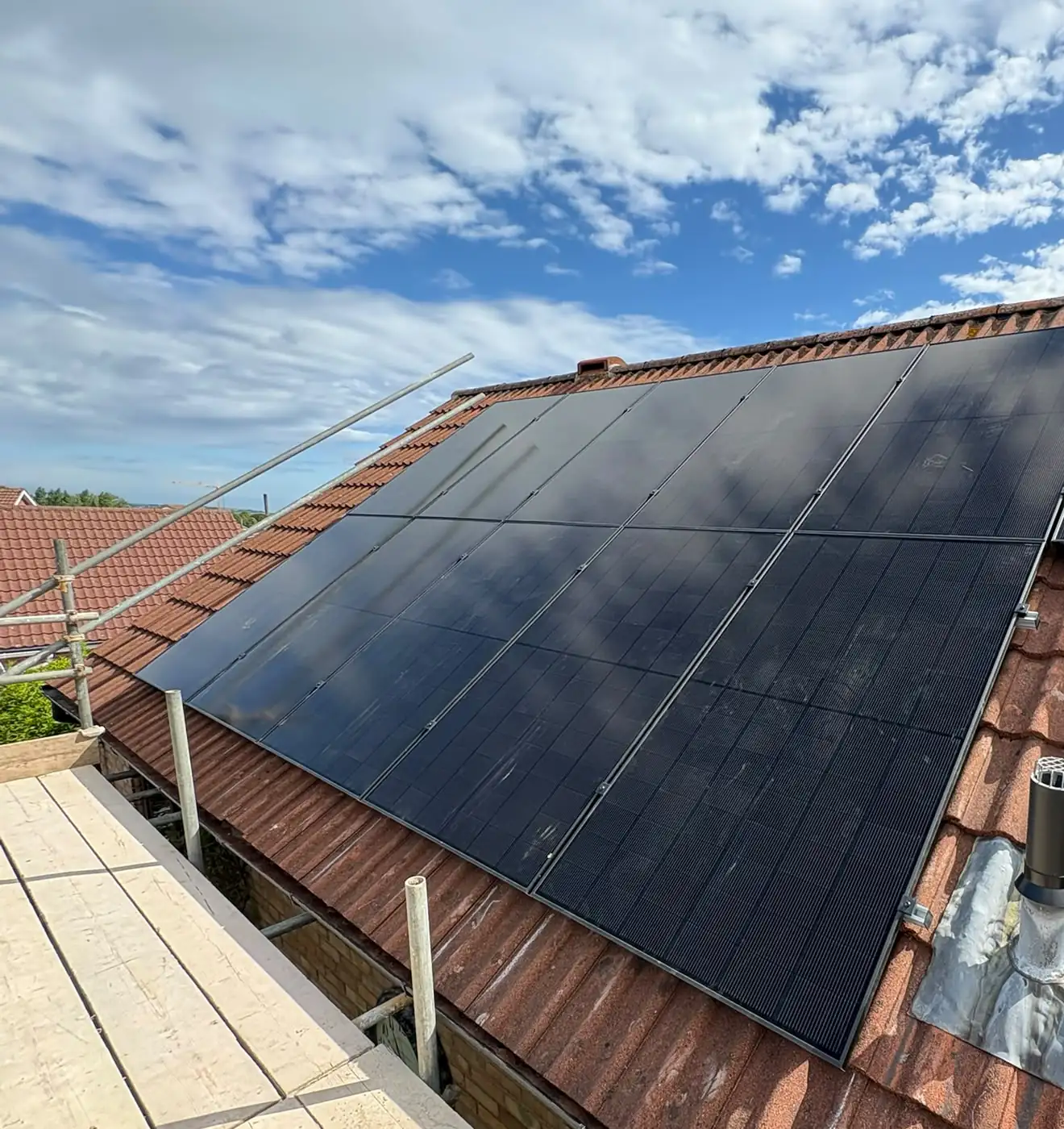
Entry-level system
Fox ESS solar and battery system
from £7,500 fully installed
- 10 solar panels
- A Fox ESS home battery
- Fitted, wired in and switched on
- Scaffolding to one side of your home
- No wait for network approval
 5.0 on Google
Store the solar power your panels make in the day and use it in the evening. One consultation, one installation, and a written quote with no pressure to sign.
Get a quote and we'll help calculate how much you could save.
Google
reviews5.0
Rated 5 out of 5
by our customers on Google
We'll only use your details for your quote. Privacy policy
Accredited installers and trusted partners





4.8 out of 5 from 36 reviews on Trustpilot
5.0 out of 5 on Google
Rated 5 out of 5 on Trustpilot
I recently had solar panels and a battery installed by Solar Save, and the entire experience was excellent from beginning to end.
Chris May 2026
Rated 5 out of 5 on Google
…getting the full benefit of overnight cheap rate electricity powering batteries and day time the batteries powering the house.
Peter W. November 2025
Rated 5 out of 5 on Trustpilot
If you need a solar system with battery storage then do not hesitate to call Solar Save, i have been totally blown away with the results today.
Peter H. February 2024
We install two main systems: Fox ESS, our entry-level system, and EcoFlow, our premium one. Each starts with a free consultation and a written quote.
Entry-level system
from £7,500 fully installed
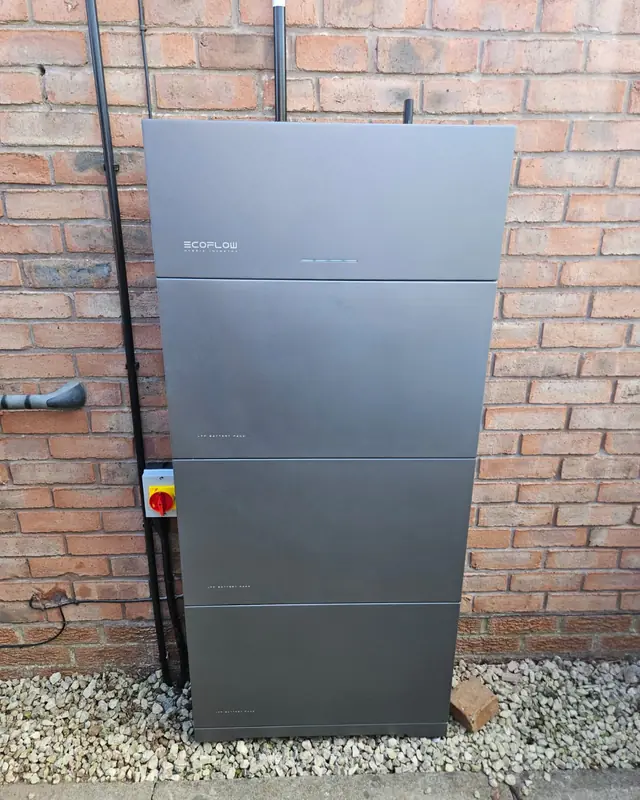
Premium system
It costs more than the Fox ESS system. Ask about both and we'll price them side by side, so you can compare.
Ask for an EcoFlow quoteThe from price is for 10 panels and a Fox ESS battery, with scaffolding to one side of your home. If your home needs more scaffolding, or a bigger system, your written quote shows the full price before you agree to anything, with no hidden fees.
Most of our customers spoke to a few solar companies first. These are the things they mention most.
We ask how much electricity you use and when, then size the battery to your evening use rather than selling the biggest one going.
Rated 5 out of 5 on Trustpilot
Jamie takes the time to build a good rapport and really understand your needs rather than just sell you solar
Scaffolding goes up, our approved roofers fit the panels and our approved electrician fits the inverter and battery on a new circuit, most often in a single day. They tidy up as they go.
Rated 5 out of 5 on Trustpilot
All the work was completed within one day.
We set up the app and the battery’s smart controls and show you how they work. Afterwards, you can ring our office with any question.
Rated 5 out of 5 on Trustpilot
James was available practically 24/7 to answer any questions before, during and after installation.
Without a battery, whatever your solar panels generate that you don't use straight away goes to the grid. You're paid for that excess electricity under the Smart Export Guarantee, but usually at far less than you pay to buy electricity back in the evening.
Your panels power the house first.
Charges the battery. Anything left over goes to the grid.
The battery powers the house, so you buy less from the grid.
The battery can charge on a cheaper tariff, then cover your evening use.
A solar battery lets you store electricity generated in the day for when you need it, so you use more of your own solar power, buy less from the grid and cut your electricity bills. The Energy Saving Trust's view is that using your own electricity is generally worth more than exporting it, because buying a unit costs more than twice the typical export rate.
92%of MCS certified battery installations in 2026 so far were on homes with solar panels. Most home batteries now go in alongside solar.
“The scaffolding went up Monday, the system was installed and commissioned Wednesday…”
Jonathan H., Trustpilot, May 2025
“The work was carried out extremely efficiently and professionally by his team who fitted the panels in such a smart way.”
Mary O., Trustpilot, August 2024
“Stephanie coordinated the install and follow ups superbly from head office, ensuring all documents from quotation to handover pack were present and correct.”
Andrew B., Trustpilot, October 2023
Rated 4.8 out of 5 from 36 reviews on Trustpilot, and 5.0 on Google. Read more reviews
The whole process usually takes two to three weeks, with the panels and battery fitted in a single day once the scaffolding is up. Bigger systems that need network approval can take longer.
By phone or at your home. Tell us how you use electricity and what you'd like from solar. No obligation.
We design your system and send a written quote with the full price and no hidden fees, then talk you through it.
Once you've signed, an independent technical surveyor checks where your panels and cables will go. It's included in your price.
Our office orders your kit and books your date. Systems over 3.68 kW need the network operator's consent first: we apply while your survey is booked, and it can take from a couple of days to 90.
Scaffold up, panels on, system wired in and switched on. Most homes are done in a day.
We notify your electricity network, email your handover pack within 7 working days, and stay on hand afterwards.
One home, panels and a battery: Lincoln, LN4, July 2026
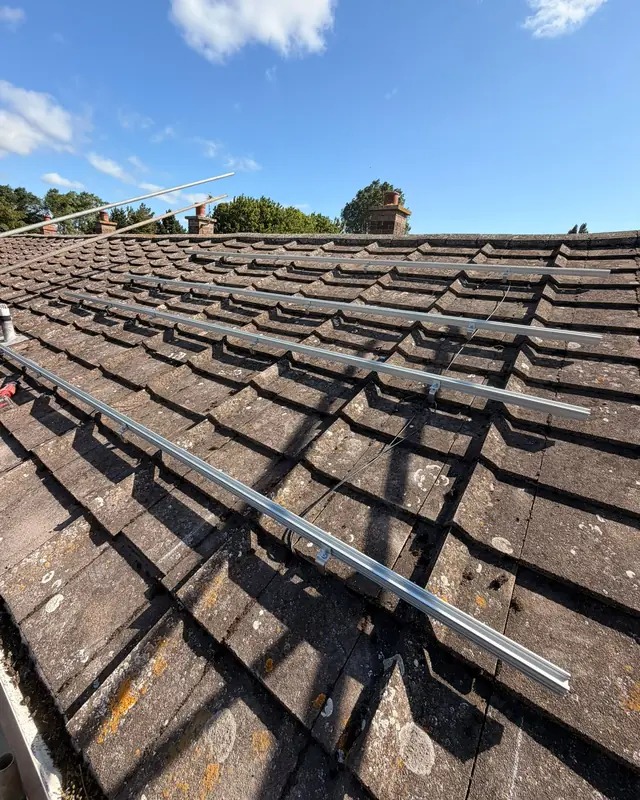
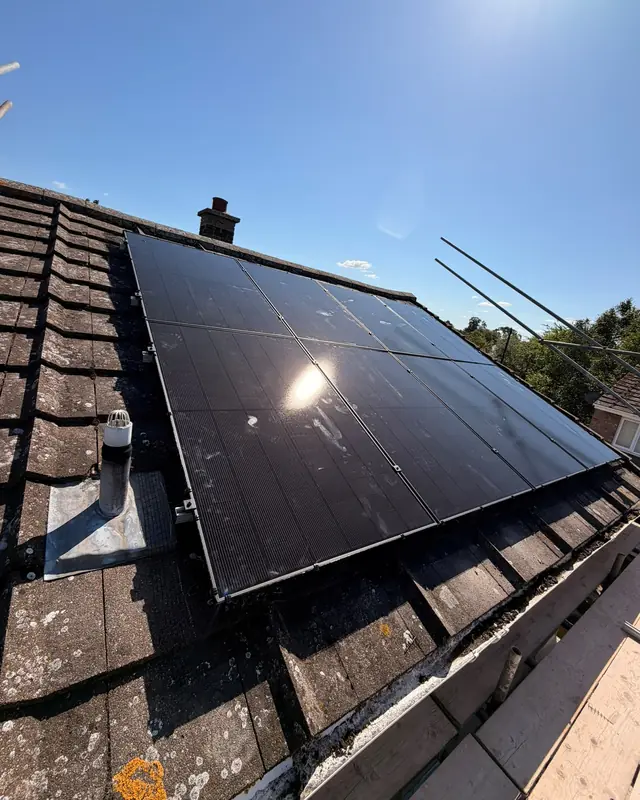
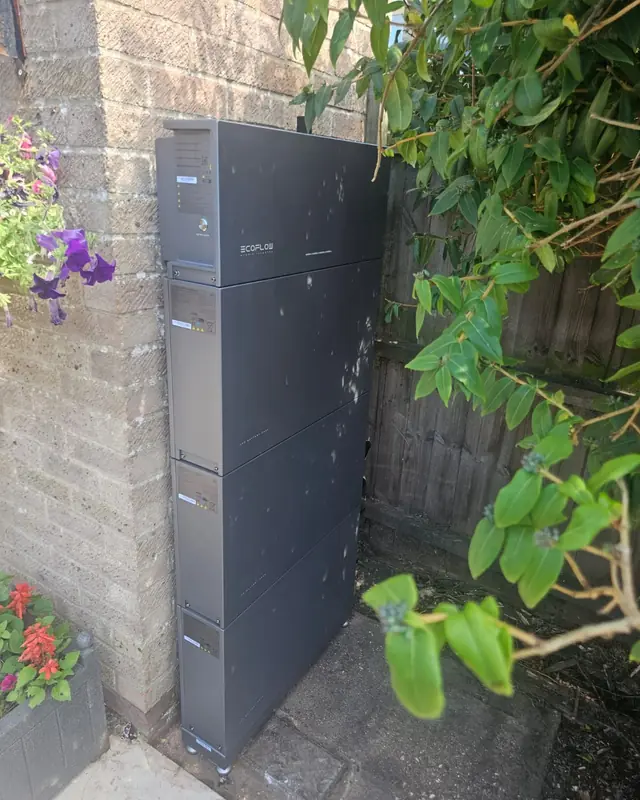
The scaffolding goes up, our approved roofers fit the panels, and our approved electrician fits the inverter and battery, connects them to your consumer unit on a new circuit with isolator switches, tests everything and switches it on. Most homes are done in one day once the scaffolding is up. Before we leave, we set up the app and show you how it works.
A battery counts as generation, so if your panels and battery together go over 3.68 kW per phase, we apply to the network operator for approval before fitting, which can take from a couple of days to 90. Otherwise we notify them afterwards. Batteries have their own MCS installation standard, MIS 3012, which covers ventilation, fire detection and keeping escape routes safe. We register the system for your MCS certificate and email your handover pack within 7 working days.
or call 0333 577 6576, Monday to Friday, 9am to 5pm. What happens on installation day
Doing both at once costs more up front than solar panels alone, but usually less than fitting them separately, because our electrician is already on site and one hybrid inverter can run the panels and the battery. If you're installing solar panels anyway, that's usually the cheapest time to add a battery.
Our price
from £7,500 fully installed
With scaffolding to one side of your home. Your written quote shows the panels and the battery as separate lines, so you can see what the battery storage adds.
Get a quote for this system| What | Guide price | Source |
|---|---|---|
| Average 4.5 kWp solar system, no battery | around £7,600 | Energy Saving Trust |
| 5 kWh battery system | around £4,600 | Energy Saving Trust |
| Average battery installation, 2025 | about £9,000 | MCS |
Solar panels and batteries are both zero-rated for VAT on homes until 31 March 2027. From 1 April 2027 the rate is due to go back to 5%.
The government's Warm Homes Loan Scheme subsidises low-interest loans of up to £15,000 for solar panels and up to £15,000 for a battery, through approved lenders. When we checked on 11 October 2026, no lenders had been named, and the subsidy cuts the rate rather than guaranteeing 0%.
A family-run business, so you’ll speak to the same people from your first call to long after the install.

Founder and Sales Director, in solar since 2010
James puts your proposal together and talks you through it. He'll answer every question, however many you've got.

Office Manager, in solar since 2013
Stephanie looks after your paperwork, the notice to your electricity network and your handover pack.
Scaffolders, roofers and electricians
The people on your roof on installation day. They fit and switch on your system, most often in a single day, and tidy up as they go.
Bryan G.October 2026
Just had our Solar supplied and fitted by SolarSave, extremely happy with the whole process. Excellent communication from quotation to post installation. Installation team were absolutely first rate, would highly recommend, thank you James and the team!!
Krzysztof B.May 2026
Solar Save – Outstanding Service from Start to Finish
What an outstanding company. I recently had solar panels and a battery installed by Solar Save, and the entire experience was excellent from beginning to end. From my first conversation with James, everything was explained clearly and professionally. He was patient, knowledgeable, and never once used pushy sales tactics. I received quotes from several other companies, but Solar Save really stood out for their honesty, communication, and customer service. Even when there were a few changes along the way, James was incredibly accommodating and made sure my installation requirements were met without any hassle. From the initial enquiry through to completion, the whole process took only around three weeks, which was a very pleasant surprise. A special mention and sincere thank you to Stephanie, who handled all of the office administration and paperwork relating to the installation. She kept everything organised and running smoothly behind the scenes, making the whole process stress-free and easy for us. Her communication and support were greatly appreciated throughout. The entire team – from the scaffolding crew to the roofers and electricians – were professional, polite, hardworking, and respectful of both us and our property. The installation itself was completed in just one day, and we were up and running almost immediately. We are now enjoying the benefits of greater energy independence and self-sufficiency. Once again, James, Stephanie, and the whole Solar Save team, thank you for your outstanding service. I would highly recommend your company to anyone considering solar installation. All the very best for the future, Chris
Natalie H.December 2025
Jamie and the team were brilliant. From sitting down with Jamie to understand the personal impact of solar based on our own energy usage, to the survey and installation, we couldn't be happier. We felt looked after, not patronised, and the team were very professional and thorough. Would highly recommend!
Peter W.November 2025
Excellent service and support. Our panels were installed less than a week after placing order, and were up and running by the following morning. Minor hick-up when the electric Aga blew a bank of heating elements a couple of weeks later, which confused us on any readings of power use, but once that was fixed we are now (hopefully) getting the full benefit of overnight cheap rate electricity powering batteries and day time the batteries powering the house. Thanks Solar Save.
Steve B.May 2024
Excellent service from start to finish, James has been great throughout the process, explained everything, discussed requirements before quoting etc.
Once price agreed, installation followed very quickly and the engineers were great as well, making sure they cleaned all the rubbish away
System is brilliant and would highly recommend both solar panels and Solarsave
Eddy K.November 2023
Fantastic work carried out by Solar Save! We are extremely happy with our new solar panels and look forward to saving money on energy moving forwards
Here's how solar batteries work alongside your panels, from roof to app.
Generate direct current (DC) electricity. Solar panels work whenever there's daylight, including on cloudy days, at a lower rate.
Turns DC electricity into the alternating current (AC) electricity your home runs on. With a battery fitted at the same time, this is usually a hybrid inverter, which runs the solar panels and the battery together.
Connect the system to your home's wiring and the grid. Solar power goes to the house first, then the battery, then the grid.
Takes what the house and battery don’t use. A generation meter records what the panels make.
Stores excess solar energy in the day, or charges from the grid on a cheap overnight rate if you choose. The stored energy powers the house when the panels can't.
An app shows what the panels are making, the electricity stored in the battery and what you're buying or selling.
There are two ways to connect a solar battery. In a DC system, the battery connects to a hybrid inverter that also runs the panels, so you don't need a second inverter. That's the usual choice when solar panels and battery storage go in together.
In an AC-coupled battery system, the battery has its own inverter, separate from the solar inverter, and connects on the house side. AC battery systems are often the simpler way to add storage to an existing solar panel system, and they don't affect Feed-in Tariff payments.
Solar panels switch off in a power cut by design, so they can't feed the grid while engineers work on it. Most batteries don't power the house in a power outage either, unless the system is set up with backup equipment. If that matters to you, say so at your consultation and we'll explain what it takes.
The solar panels are sized to your roof and your yearly use. The battery size depends on your evening and overnight use, not your daily total.
Which? says the average home uses between 8 and 10 kWh of electricity a day. Much of that is used while the panels are working.
Home batteries are lithium-ion batteries and usually hold 5 to 15 kWh, according to Which?. The Energy Saving Trust says a typical home battery is about 10 kWh.
Usable storage capacity is less than the number on the box, because batteries don't fully empty. Compare usable figures.
Panels make far more energy in summer than in winter. Government figures for small solar systems show October to December producing about a third as much as April to June in 2024.
A battery too big for your panels will rarely fill from solar in winter. That's fine if you charge it on a cheap overnight tariff, but it's money spent on capacity you won't use otherwise.
We ask how much electricity you use and when, whether anyone's home in the day, and whether you have or plan an electric car or heat pump. That decides the battery size. Our guide on what size battery you need walks through it.
Honestly, how much a battery takes off your energy bills depends on how you use electricity, your tariff and electricity prices.
If few of the reasons for a battery apply to you, solar panels alone may be the better buy, and you can add a battery later. We'll price it both ways so you can decide. Read more in are solar batteries worth it?
Already have solar panels? We can add a battery to your existing system, even if another company fitted it.
What stands behind your system once it’s fitted.
Panel performance
30 years
Guarantees the panels keep producing a minimum level of power
Panel product
25 years
Covers faults in the panels themselves
Installation
MCS certified
So your system qualifies for export tariffs
Get your price for panels and a battery
Free consultation, a written quote with no hidden fees, and no pressure to sign. Or call the office, Monday to Friday, 9am to 5pm.
Yes. Doing both at once is usually cheaper, but a battery can be added later. If you think you might, ask for a hybrid inverter now, so the battery can plug into it without a second inverter.
There's no fixed answer, because it depends on your evening use rather than the panels. Many homes with a system that size suit something in the 5 to 10 kWh range. We size it from how and when you use electricity.
Not as standard. Most systems shut down in a power cut. Some can keep essential circuits running with extra backup equipment; tell us if you want that and we'll explain the options.
Usually outside, or in a garage or utility room: the fire safety standard for home batteries, PAS 63100, prefers outdoors and rules out lofts, bedrooms and escape routes like landings and stairs. A typical unit is about 100 by 60 by 25 cm, according to the Energy Saving Trust. We agree the spot with you before anything is fitted.
Not usually. A battery inside a garage or utility room isn't normally something planning covers. If it's going on the outside of a listed building, or a building in a conservation area, we'll check with the council first.
The Energy Saving Trust expects solar panels to last 25 years or more, and puts the typical lifespan of solar panel batteries at 10 to 12 years. Battery warranties are often 10 years, so expect to replace a battery at least once in the life of the panels.
You can buy solar panels and a battery yourself, but you'd pay full VAT, because the 0% rate only applies when the same company supplies and installs them. Adding the circuits is notifiable electrical work, and you need an MCS certified installation to be paid for the electricity you export.
There isn't one best battery for every home. Compare the usable capacity, the warranty, which Which? says is often 10 years, and how it connects to your inverter. We recommend one in your quote and explain why.
Figures and rules on this page were checked on 11 October 2026. Schemes, tariffs and prices change, so check the latest before you decide.
Tell us a little about your home and how you use electricity. We'll talk through your roof and the spot for the battery, then send a written quote, with panels-only priced alongside if you'd like to compare.
Prefer to talk? Call 0333 577 6576, Monday to Friday, 9am to 5pm.
Get a quote and we'll help calculate how much you could save.
Google
reviews5.0
Rated 5 out of 5
by our customers on Google
We'll only use your details for your quote. Privacy policy