

What's new in solar panels this year?
Three changes matter to households in 2026. One is on sale now, one is coming, and one is new to Britain.
Best on sale now
About 24%
efficiency for a back-contact solar panel, the highest in mass production
N-type TOPCon leads the market, and back-contact leads on efficiency. The industry roadmap says the old price premium for this kind of panel has largely gone.
Coming next
2027 to 2028
when perovskite tandem modules are expected in mass production
Tandem cells hold the lab records, but nobody sells them for British roofs yet. Their long-term durability is still being proven.
New to British households
800 W
the most a plug-in kit can make
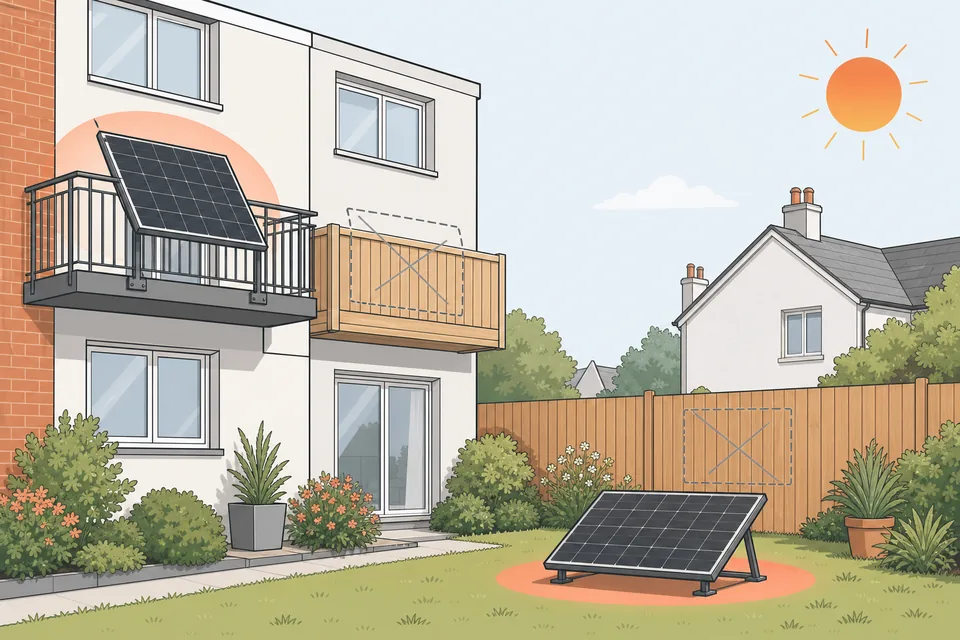
Plug-in solar became legal in Great Britain on 27 August 2026. It's a small step: up to 20% of an average home's electricity use.
From the ITRPV industry roadmap (June 2026), Oxford PV and the government, checked 16 November 2026.
| Technology | On sale for British roofs? | Worth it for most households? |
|---|---|---|
| N-type TOPCon | Yes. The new standard | Yes |
| Back-contact | Yes | Yes, most of all on a small roof |
| Heterojunction | Yes | Yes, if the price is close |
| Bifacial and glass-glass | Yes | Only a small gain on a pitched roof |
| Plug-in solar | Yes, since 27 August 2026 | As a small extra, not instead of a roof system |
| Solar roof tiles | Yes | Worth asking about if you're re-roofing |
| Perovskite tandem | Not yet. Mass production expected around 2027 to 2028 | Not yet |
| Lab ideas | No | No |
Which new panel types can you buy now?
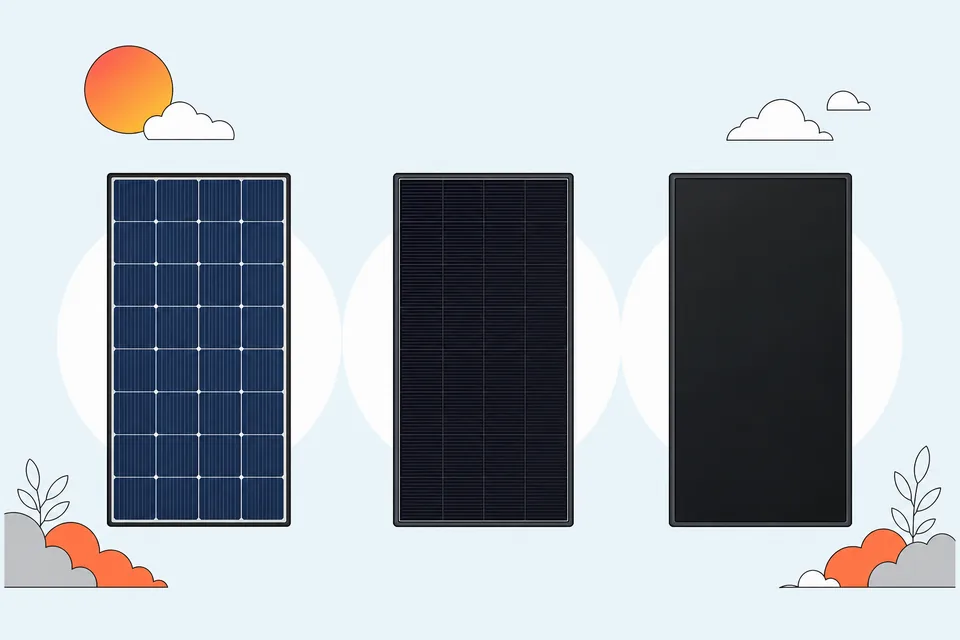
Three cell designs make up the best solar panels available today: N-type TOPCon, back-contact and heterojunction. All three are monocrystalline, and all three are on sale to British households now.
Most of what's new in solar PV is inside the cell. The latest solar cells are built on N-type wafers, the thin slices of crystal each cell is made from. N-type wafers made up about 82% of the market in 2025, the industry's ITRPV roadmap says, and it expects more than 98% within ten years.
1. N-type TOPCon: today's standard
TOPCon overtook the older PERC design in market share in 2024, the ITRPV roadmap says, and the shift sped up through 2025.
- Efficiency: about 23.5% for a typical TOPCon module, against 21.7% for PERC.
- Price: the roadmap says price premiums for high-power, bifacial and N-type modules have largely disappeared.
- An example: Trina's Vertex S+ is an N-type TOPCon panel of up to 23.8%. Trina guarantees 87.4% of its power after 30 years.
So you shouldn't need to pay much extra for one. If a quote charges a lot more just because a panel is "N-type", ask why.
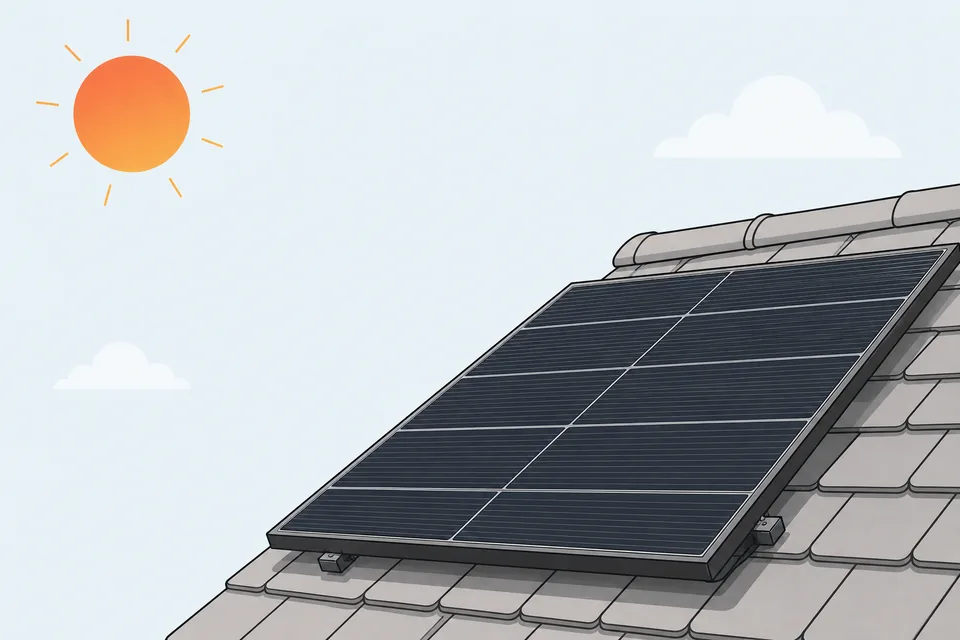
Who it suits: most roofs. It's a proven, widely made design with no real price premium now.
2. Back-contact: the most efficient you can buy
TOPCon-based back-contact modules achieve efficiency rates of about 24.1%, the highest of the designs in mass production, the ITRPV roadmap says. It expects them to win about 28% of the market in the next decade.
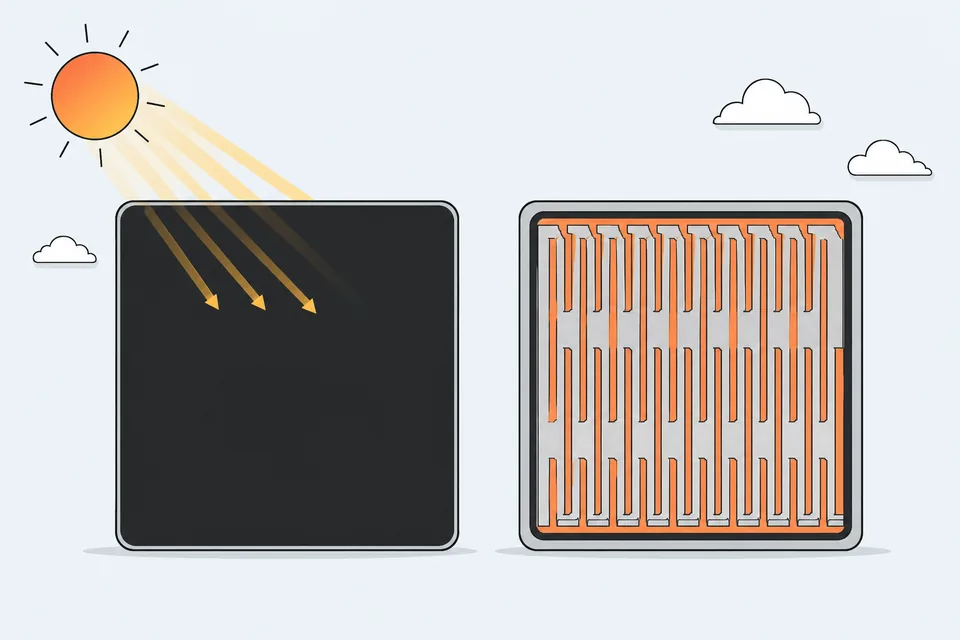
A normal cell carries thin metal lines across its front to collect the power. LONGi says its back-contact design moves all the electrical contacts to the back of the cell. That leaves the front free of metal lines, so the cell can capture more light.
Moving the contacts brings two more changes:
- They look all black, with no silver lines. LONGi says this cleaner front appeals to homeowners and architects.
- They may cope better with partial shade. LONGi says its latest design cuts the power lost to partial shading by up to 70% against conventional modules. AIKO lists partial shading optimisation for its modules too. These are the makers' own claims.
Each back-contact solar panel makes extra power for its size, so you need less space for the same size of system. That matters most on a small or awkward roof, such as a terrace or a hipped roof. On a big roof the gap is small: 24.1% against 23.5% is about 2.6% extra, which one more TOPCon panel would cover on a ten-panel system.
AIKO's Neostar 2P54 is one example: up to 24.3% efficient, with a 25-year product warranty and a 30-year performance warranty. AIKO now sells a third generation of these modules.
Who it suits: small or awkward roofs, roofs with some shade, and anyone who wants an all-black look.
3. Heterojunction: low power loss each year
Heterojunction (HJT) modules average about 23.5% efficiency, level with TOPCon, the ITRPV roadmap says. Of the three datasheets in this guide, REC's heterojunction panel loses the least power each year.
REC's Alpha Pure-RX is a heterojunction panel. Its datasheet shows:
- A yearly loss of just 0.25%, with 92% of its power output guaranteed in year 25.
- A temperature coefficient of -0.24% per °C. Every solar panel loses a little power as it warms up. This number says how much it loses for each degree above 25°C.
- Efficiency of 21.6% to 22.6%, lower than the newest TOPCon and back-contact designs.
For comparison, Trina's TOPCon panel allows up to 0.4% a year and -0.29% per °C. AIKO's back-contact panel allows up to 0.35% a year and -0.26% per °C.
Read the small print, though. REC's warranty against faults is 20 years as standard, or 25 years only when an REC Certified Professional fits and registers them.
Who it suits: anyone who wants a very low yearly loss of power, if the price is close to TOPCon.
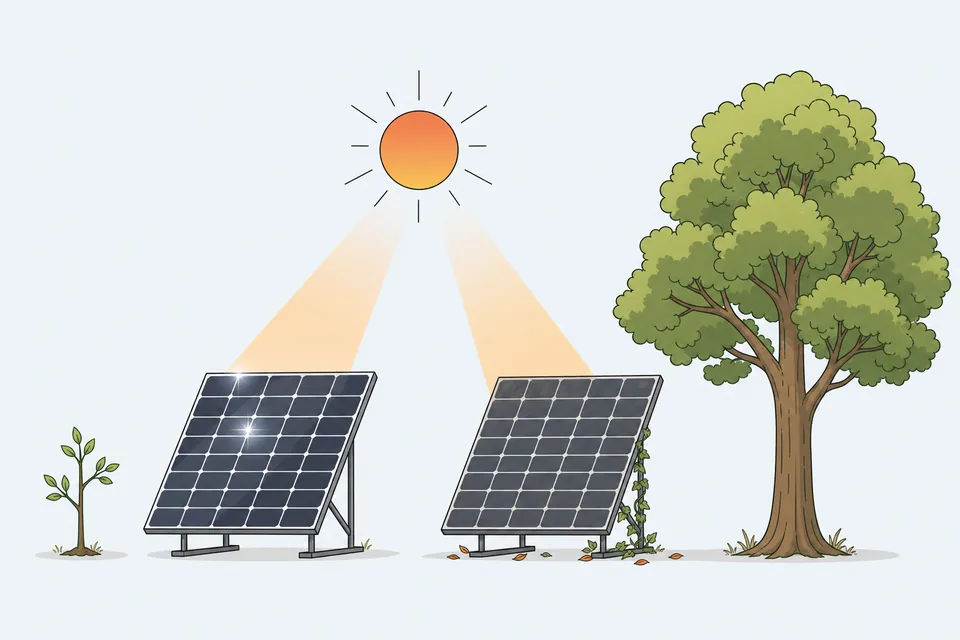
Every design slows down a little with age. See how long solar panels last for what happens after 25 years.
4. Bifacial and glass-glass designs
A bifacial panel turns light into power on both faces. Glass-glass modules have glass on the back as well as the front, so light can reach the rear of the cells.
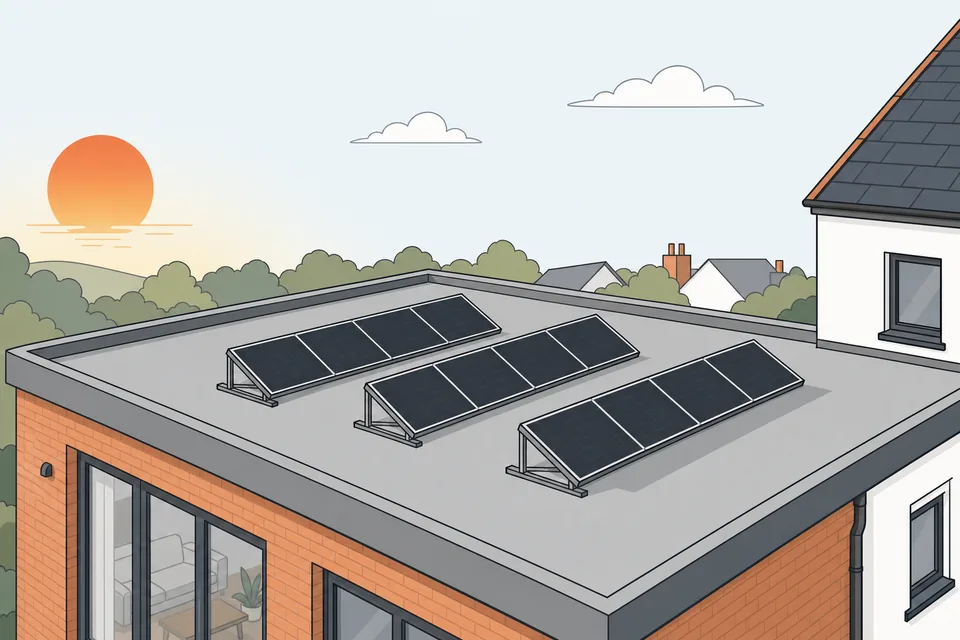
The gain depends on how much light reaches the back. DualSun, a panel maker, puts it at around 5% where the rear gets little light, as on a typical house roof. On a white, reflective flat roof with the modules raised at the right angle, it says the gain can be as high as 30%.
So on a pitched roof, treat bifacial as a small bonus, not a reason to choose a panel. On a flat roof, or a garage roof with frames, it's worth asking about.
Who it suits: flat and garage roofs with the modules on frames, best of all over a pale, reflective surface.
What other new ways can you add solar?
Two newer options change where solar power fits on a house, rather than what the cells are made of.
5. Plug-in solar kits, legal since August 2026
Plug-in solar became legal to buy and use across Great Britain on 27 August 2026, the government says. The government calls them easy to install, with no installation cost.
- Size: each one makes up to 800 W.
- Savings: the government says that's enough for up to 20% of an average home's electricity use, and could save up to £110 a year.
- Where to buy: Currys, B&Q, Screwfix, Amazon, Argos and Wickes have said they'll stock them.
- Permission: check first whether you need consent from a landlord or freeholder, or planning or listed building consent.
For comparison, MoneySavingExpert puts a typical 4.5 kWp roof system's bill savings at about £180 to £330 a year, before export payments. So a plug-in panel is a small extra, not a replacement for a solar panel system on the roof. Read more in our guide to plug-in solar panels.
Who it suits: renters and flats, with the landlord's or freeholder's OK, or anyone who wants a small first step into solar energy.
6. Solar roof tiles and in-roof systems
Solar roof tiles and in-roof (roof-integrated) modules form part of the roof itself, instead of sitting on rails above the tiles.
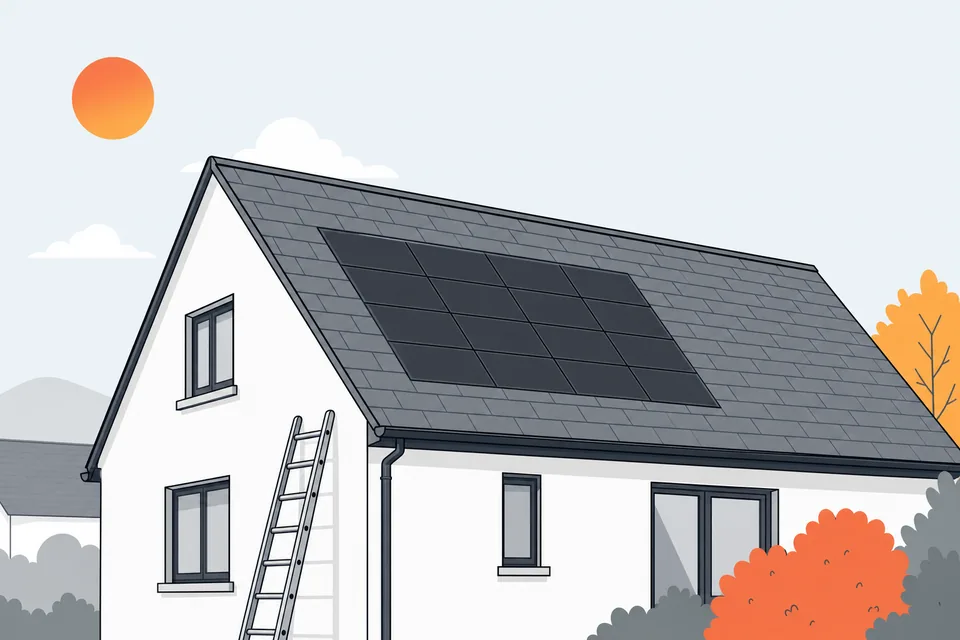
Viridian Solar, a UK company based near Cambridge, says its roof-integrated system suits both new builds and existing houses, and that roof-integrated panels are "significantly better looking".
They're worth asking about if your roof is being replaced anyway. Get prices for both an in-roof and an on-roof system before you decide. Either way, check the installation will be MCS certified, which you need for export payments.
Who it suits: new builds and roofs being replaced, where looks matter most.
What advanced solar technology is still to come?
Most solar breakthroughs in the news are records for single cells in labs. A record cell is not the panel on your roof.
A panel joins dozens of cells under glass, and its efficiency is measured across its whole area, so it scores lower than a record cell. REC's heterojunction panel, for example, joins 88 half-cut cells.
Lab cells have conversion rates far above anything you can buy. The best lab cell on a single-crystal wafer reaches 28.1%, Fraunhofer ISE says. The average crystalline panel made at the end of 2024 was 22.7% efficient.
Not all the change is in the design of the cell. Panel factories used about 7,244 tonnes of silver in 2025, about 21.4% of the world's supply, the ITRPV roadmap says. So makers are starting to replace silver with copper, mostly in heterojunction cells. By 2036 the roadmap expects copper-based contacts in 62% of heterojunction cells, and pure copper in another 30%.
7. Perovskite tandem cells: the one to watch
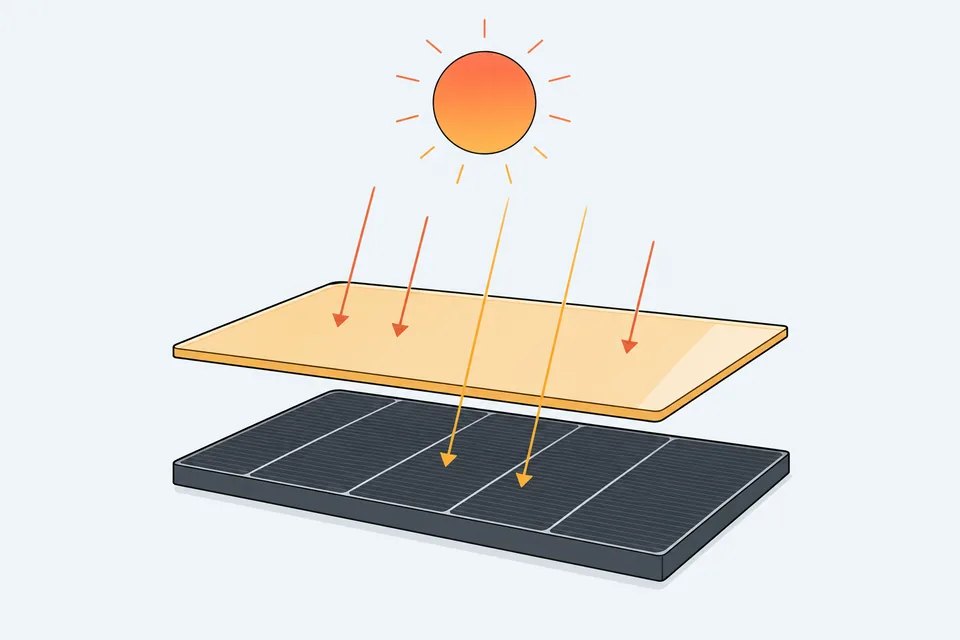
A tandem cell stacks two layers that each use a different part of sunlight. Oxford PV explains that standard silicon cells absorb light at the red end of the spectrum. A thin perovskite layer on top can be tuned to the blue end, so together they capture more of the sun's light than a single cell can.
The records are impressive:
- LONGi announced a 35.5% tandem cell in July 2026, certified by the European Solar Test Installation (ESTI).
- Oxford PV made a 26.9% tandem module the size of a household panel in June 2024, certified by Fraunhofer CalLab.
But you can't buy one for your roof yet:
- Oxford PV's first commercial tandem modules went to an undisclosed US company for a utility-scale project in September 2024, PV Tech reported. Their cells were 24.5% efficient. Oxford PV says the modules make up to 20% more energy than a standard panel.
- Oxford PV says what it sells is the cell inside the panel, so it won't sell directly to homeowners.
- Oxford PV aims for 27% efficiency and a 20-year lifespan by 2028, with mass production by then, PVTime reported in January 2026.
- The ITRPV roadmap expects tandem cells to enter mass production around 2027, with modules of about 27.4% by 2028.
Nobody yet knows how reliable tandem modules will be over decades on a roof. A 20-year target is shorter than the 25 or 30-year power guarantees on today's modules from AIKO, Trina and REC. Until tandem modules carry the same guarantees, they're one to watch rather than one to buy.
Who it suits: nobody yet. Look again once tandem modules come with 25-year guarantees and a British stockist.
8. Lab ideas you can't buy yet
These make headlines, but none is close to a British roof. Each is a research result, with no panel you can order.
Textured solar cells
Researchers at Abdullah Gül University in Türkiye modelled organic solar cells shaped like tiny half-shells. In computer simulations, the shape absorbed 66% more light than a flat cell, for one type of polarised light (optics.org, February 2024). No products or dates were announced.
Kesterite and thin-film cells
Kesterite is made from copper, zinc, tin and sulphur, which are plentiful and non-toxic. In January 2025 a UNSW Sydney team reported a record 13.2% kesterite cell. Its lead researcher expects commercial use by 2030.
Thin-film PV panels of all kinds made up only about 2% of world production in 2025, Fraunhofer ISE says.
Should you buy now or wait for better technology?
For most households, buy now. A tandem panel might give about 14% extra from the same roof. But it would take 14 to 15 years to win back two years of waiting, and only if everything goes to plan.
Here's our sum, using published figures:
- Today: back-contact modules average about 24.1% (ITRPV).
- 2028: tandem modules are expected to reach about 27.4% (ITRPV). That's about 14% more power from the same area of roof.
- What a system earns: MoneySavingExpert puts a typical 4.5 kWp system's yearly benefit at about £680 to £930, bill savings plus export payments, depending on where you live.
- Waiting two years gives up about £1,360 to £1,860 of that.
- The tandem gain: 14% of £680 to £930 is about £95 to £130 a year. At that rate it takes 14 to 15 years to win back the solar energy savings you'd miss in two years of waiting. That's the break-even point.
This is our sum, not a forecast. It only works out if tandem modules reach British homes on time, cost no more than today's and last 25 years or more. None of that is known yet. MoneySavingExpert's figures assume a 15p export rate and 2,500 kWh of use a year.
The reasons to buy now are simpler:
- Tandem modules aren't sold for British homes, and their prices aren't known.
- Oxford PV is aiming for a 20-year life. Over 20 years, 14% extra adds up to less than a standard system makes in 25 years (our sum: 20 x 1.14 is under 25).
- Higher efficiency only pays when roof space limits the size of the system. Where there's room to spare, one or two more standard panels do the same job.
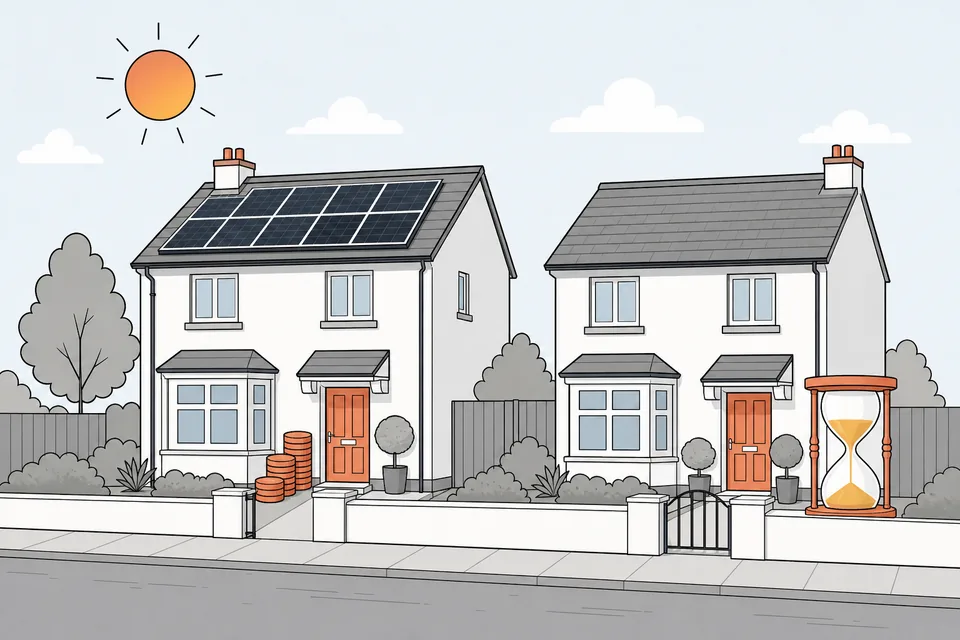
VAT matters too. Installed solar panels and batteries are 0% VAT until 31 March 2027, HMRC says. From 1 April 2027 the rate goes back to 5%: £50 more for every £1,000 of the price before VAT.
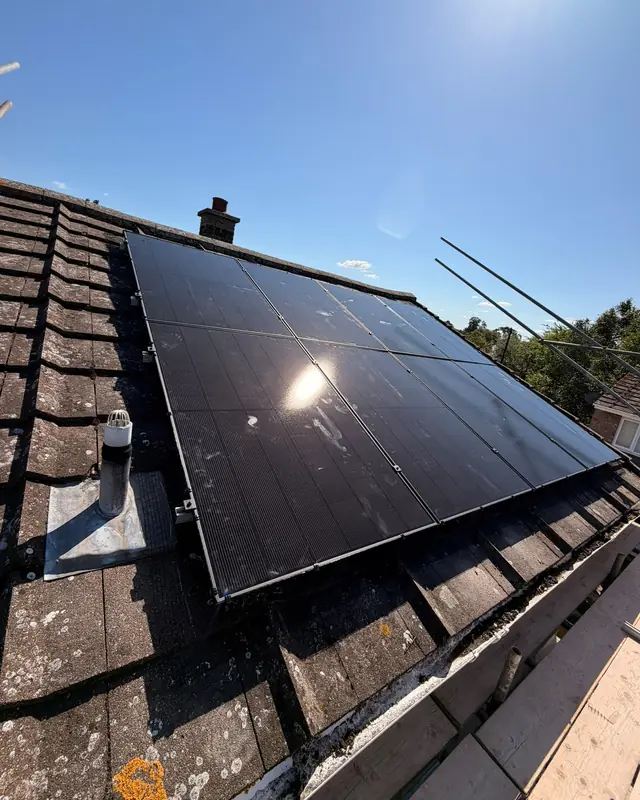
Waiting can make sense if your roof needs work in the next few years. Sort the roof first, so nothing needs lifting off later.
Not sure which panels suit your roof?
We'll look at your roof and how you use power, then give you a written quote. Ask us which panel we'd use and why. Free consultation, no pressure to sign.
Or call 0333 577 6576, Monday to Friday, 9am to 5pm. We'll only use your details for your quote. Privacy policy
How to check the panels in a quote
Ask for the datasheet of the panel in your quote. Six things on it tell you more than a "new technology" label:
- Module efficiency, not cell efficiency. Datasheet efficiency ratings are measured in standard test conditions: 1,000 W/m² of light at 25°C. The datasheets in this guide range from 21.6% to 24.3%.
- The cell type: N-type TOPCon, back-contact or heterojunction. An older P-type PERC panel still works, but it isn't new.
- An MCS listing. MCS keeps a directory of certified products that you can filter by maker and search by keyword or certificate number. MCS says its certified products meet its standards for quality, reliability and performance.
- Two warranty terms. One covers faults in the panel itself, usually 20 to 25 years on the modules here. The other guarantees its power, usually for 25 or 30 years.
- The yearly loss: 0.25% to 0.4% a year after the first year, on the datasheets in this guide.
- Who stands behind the warranties in Britain. A warranty is only as good as the company that honours it.
Before you agree to any solar panel installation, check it will be MCS certified. To be paid under the Smart Export Guarantee for the power you export, you need an MCS-certified installation and installer, or an equivalent scheme, the government says.
Then ask your installer four questions:
- Which panel is it, and which cell type does it use?
- Is it in the MCS directory of certified products?
- Who handles a warranty claim if a panel develops a fault?
- Would a back-contact panel make a real difference on my roof, and what would it add to the price?
Our guide to the best solar panel brands shows how four current modules stack up on their own datasheets.

Which solar panels do we fit?
The panels we fit carry a 25-year warranty against faults and a 30-year performance warranty. Ask us which panel we'd fit on your roof, and for its datasheet, then check it against the list above.
We offer two main systems with a battery: the Fox ESS entry-level system, with 10 panels, and the EcoFlow premium system.
A customer wrote: "Everything is explained in detail so you make the right choice for a system that fits your needs." (Jai A., Trustpilot, July 2026).
Want to know which panel would suit your roof? Ask for a free quote.
What else is new: batteries, inverters and export?
Much of what's new in household solar energy happens after the power is made: storing it, managing it and selling what's spare.
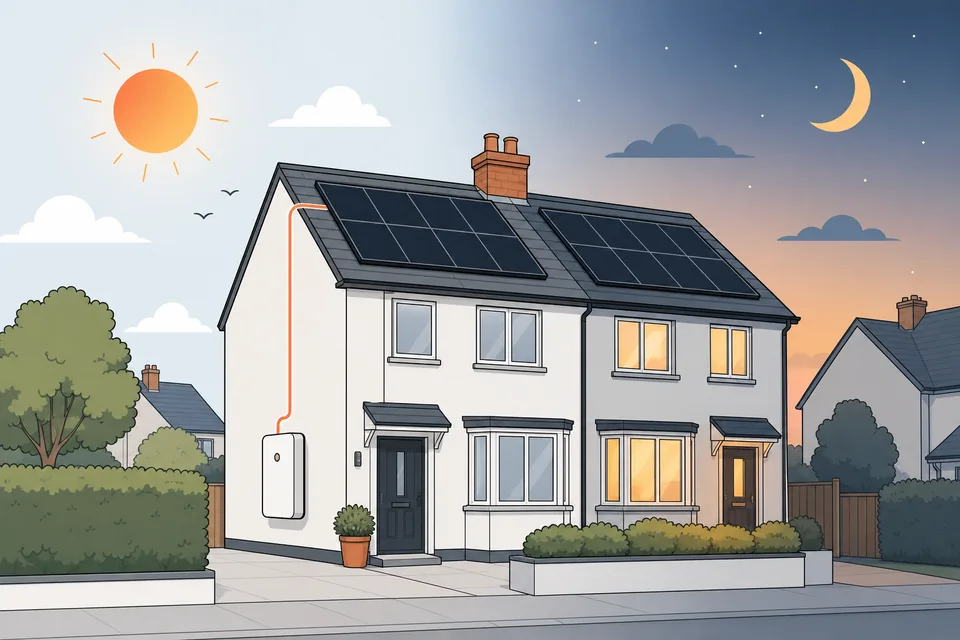
- A battery stores daytime solar energy for the evening. MCS says it's common to connect one to solar panels, and to check any battery is compatible with your existing or planned solar panel setup.
- Optimisers and microinverters fit behind each panel and can help when part of a roof is shaded. See our guide to optimisers and microinverters.
- Export payments: under the Smart Export Guarantee, you apply to a tariff supplier and are paid for every unit you feed back to the grid. You need a meter that gives half-hourly export readings, typically a smart meter, the government says.
Both our systems include a battery, from Fox ESS or EcoFlow. Read more about solar panels with a battery.
How has solar panel technology changed?
Steadily. Commercial monocrystalline solar panels have gone from about 17% to just under 25% efficiency in ten years, Fraunhofer ISE says.
Older polycrystalline modules have, in practice, disappeared from the market. In 2025 about 98% of production used single-crystal wafers.
| Cell design | Typical module efficiency | Where it stands |
|---|---|---|
| P-type PERC | 21.7% | The old standard. Overtaken by TOPCon in 2024 |
| N-type TOPCon | 23.5% | Ahead of PERC since 2024 |
| Heterojunction | 23.5% | Level with TOPCon. REC's loses 0.25% a year |
| Back-contact | 24.1% | The most efficient in mass production |
| Perovskite tandem | About 27.4% by 2028 (forecast) | Mass production expected around 2027 |
| Single-layer designs, 2035 | About 26.3% (forecast) | Where the roadmap expects today's designs to be by 2035 |
What does that mean on a roof? The same area of back-contact modules makes about 11% more than PERC modules did (24.1% against 21.7%). That's our sum from the roadmap's averages. Against a typical single-crystal module of ten years ago, at about 17%, it's around 40% extra from the same area (24.1% against Fraunhofer ISE's 17%).
Expect efficiency improvements in steps, not leaps. The roadmap sees single-layer designs going from about 24% today to about 26.3% by 2035. Tandem cells are the bigger jump, if they prove they can last.
The short version: the newest panels worth buying are already on sale. Tandem is the one to watch, not to wait for.
Questions people ask
Are perovskite solar panels on sale in the UK?
Not for homes yet. Oxford PV's first tandem modules went to a US utility-scale project in 2024, and it says it won't sell directly to homeowners. The ITRPV roadmap expects mass production to start around 2027.
Do the newest designs cost more?
Not much, at the factory gate. The ITRPV roadmap says price premiums for high-power, bifacial and N-type modules have largely disappeared. What you pay depends on the whole system, so look at the full quote.
How long will a new panel last?
Makers guarantee the power of today's modules for 25 or 30 years: 30 years for AIKO and Trina, 25 for REC. Tandem modules have no long track record yet, and Oxford PV aims for a 20-year lifespan by 2028.
What does N-type mean on a quote?
It describes the wafer each cell is made from. N-type wafers made up about 82% of the market in 2025, the ITRPV roadmap says. TOPCon, heterojunction and back-contact cells all use them.
About this guide
Written by the SolarSave team in Retford: MCS certified installers, led by a founder in solar since 2010. We checked every figure against panel makers' datasheets, the ITRPV roadmap, Fraunhofer ISE, MCS, HMRC and the government on 16 November 2026. Records and forecasts change quickly, so check the date at the top.
The 23 sources we checked
- PV Tech: ITRPV 2026, the solar industry roadmap, 25 June 2026, checked 16 November 2026
- Fraunhofer ISE: Photovoltaics Report, updated 14 July 2026, checked 16 November 2026
- Trina Solar: Vertex S+ NEG9R.28 datasheet (2026), checked 16 November 2026
- AIKO: Neostar 2P54 Mono-Glass 450 to 485 W, checked 16 November 2026
- AIKO: Neostar 3S54 Mono-Glass (third generation), checked 16 November 2026
- LONGi: How HPBC 2.0 back contact technology improves performance in partial shade, checked 16 November 2026
- REC: Alpha Pure-RX datasheet, August 2024, checked 16 November 2026
- DualSun: What is a bifacial module, and what gains does it allow?, 30 January 2025, checked 16 November 2026
- GOV.UK: Households can save as plug-in solar panels come to market, 26 August 2026, checked 16 November 2026
- MoneySavingExpert: Solar panels, are they worth it?, updated 28 September 2026, checked 16 November 2026
- Viridian Solar: Roof integrated solar PV, checked 16 November 2026
- Oxford PV: Technology, checked 16 November 2026
- LONGi: 35.5% world record for a tandem solar cell, 14 July 2026, checked 16 November 2026
- Oxford PV: Residential-size module with a record 26.9% efficiency, 19 June 2024, checked 16 November 2026
- PV Tech: Oxford PV ships first commercial perovskite tandem modules, 5 September 2024, checked 16 November 2026
- Oxford PV: Frequently asked questions, checked 16 November 2026
- PVTime: Oxford PV targets 27% efficiency and a 20-year lifespan by 2028, 19 January 2026, checked 16 November 2026
- optics.org: Hemispherical-shell organic solar cells (Abdullah Gül University), 19 February 2024, checked 16 November 2026
- UNSW Sydney: World-record efficiency for a kesterite solar cell, 28 January 2025, checked 16 November 2026
- HMRC: VAT on energy-saving materials and heating equipment (Notice 708/6), checked 16 November 2026
- MCS: Product Directory, checked 16 November 2026
- GOV.UK: Smart Export Guarantee, updated 19 October 2026, checked 16 November 2026
- MCS: Battery storage, updated 8 July 2026, checked 16 November 2026