

| Problem | Who fixes it |
|---|---|
| Inverter warning light or error code | The fitting firm, or the maker |
| No power at all | The fitting firm, after ruling out a power cut |
| Isolator fault or burning smell | 999 if there's smoke or fire; otherwise a qualified electrician or solar installer, urgently |
| Lower output than last year | You first, then a test |
| Cracked glass or burn marks | The fitting firm, or the panel maker |
| Grime that rain doesn't shift | A clean from the ground |
| Birds or squirrels nesting | A proofing specialist, after nesting |
| Roof leaks near the panels | The fitting firm |
| Blank app, stuck meter, empty battery | You first, then the fitting firm |
How common are solar problems?
In a Which? survey of more than 2,000 owners in April 2024, 68% had no technical issues.
When something did go wrong, it was usually the inverter, at 15% of owners. Faulty connections or wiring came next, at 3%.
When is a fault dangerous?
Most faults cost you power, but a few are a fire or shock risk. Act straight away if you notice:
- a burning smell, smoke, scorch marks or crackling from the inverter, isolators, battery or cables
- damaged or chafed cables, an electric shock hazard
- broken glass or burn marks on a panel
If there's smoke or fire, get everyone out, stay out and call 999. Otherwise keep clear and call a qualified electrician or solar installer.
To shut the system down:
- Follow the shut-down steps in your handover pack.
- If you don't have them, switch off the solar trip switch in your fuse box.
- Then, if it's safe, turn off the isolators. These are the solar circuit's off switches, usually one at the inverter and one near the fuse box. Never touch one that's scorched, smoking, crackling or smells of burning.
Leave everything switched off until a professional has found the fault.
Switching off doesn't make the roof safe. Panels, and the cables from them to the DC isolator, stay live whenever it's light, the BRE warns.
The fire risk is low. A 2018 BRE study for the government investigated 80 possible solar-related fire incidents, about 0.01% of UK systems at the time. DC isolators posed the greatest risk. Electrical Safety First advises a smoke or heat alarm on every floor.
Inverter and electrical issues
These are the most common faults. Read codes and check switches, but leave wiring to a professional.
1. Inverter problems and error codes
The inverter turns your panels' power into electricity for your home.
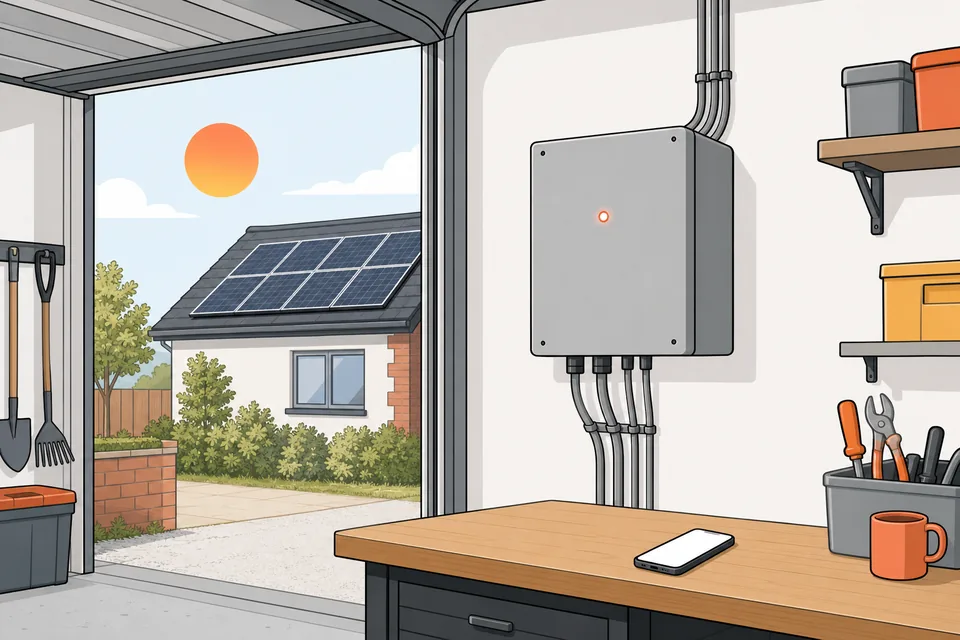
- Read the code. Look up any error code or warning light in the manual.
- Check the solar trip switch in your fuse box is up. If it trips again, leave it off and call the firm that fitted it or a qualified electrician.
- Restart only by the book, using your handover pack or the maker's manual.
Contact the firm that fitted it first, or the maker's support team if it's under warranty and the firm can't help. Inverters typically need replacing every 10 to 15 years, at around £800, says the Energy Saving Trust.
Cuts out on sunny afternoons? The local grid voltage may be too high. UK supplies must stay between 6% below and 10% above 230 volts, and inverters disconnect for safety above that. Sunsynk, an inverter maker, says contact your network operator if it keeps happening, and never take its settings outside UK rules to stop it.
2. System faults: no power at all
Nothing at all on a bright day usually means a power cut, a tripped switch, an inverter or wiring fault. After a power cut, systems usually restart on their own after a short delay, says UK Power Networks. Otherwise, get it fixed quickly.
3. Loose or corroded connections
Causes include loose connections, wires chafing on roof tiles and poor workmanship. Isolators also fail through loose parts, damp or burnt-out terminals.
Badly fitted connectors can cut power to a whole string, or chain, of panels, the IEA's solar experts add.
Have any wiring or isolator fault checked urgently by a qualified electrician or solar installer, and never open one yourself.
Problems with the panels
You can spot most of these in your output figures or from the ground.
4. Low power output and shading issues
Solar energy is not always available. Across UK solar systems on the Feed-in Tariff, output from October to December 2024 was about a third of April to June (DESNZ, December 2025). Compare each month with the same month last year, and see how panels cope in winter.
Then look for new shade from a grown tree or new building. Keep branches trimmed, and see whether optimisers or microinverters would help.
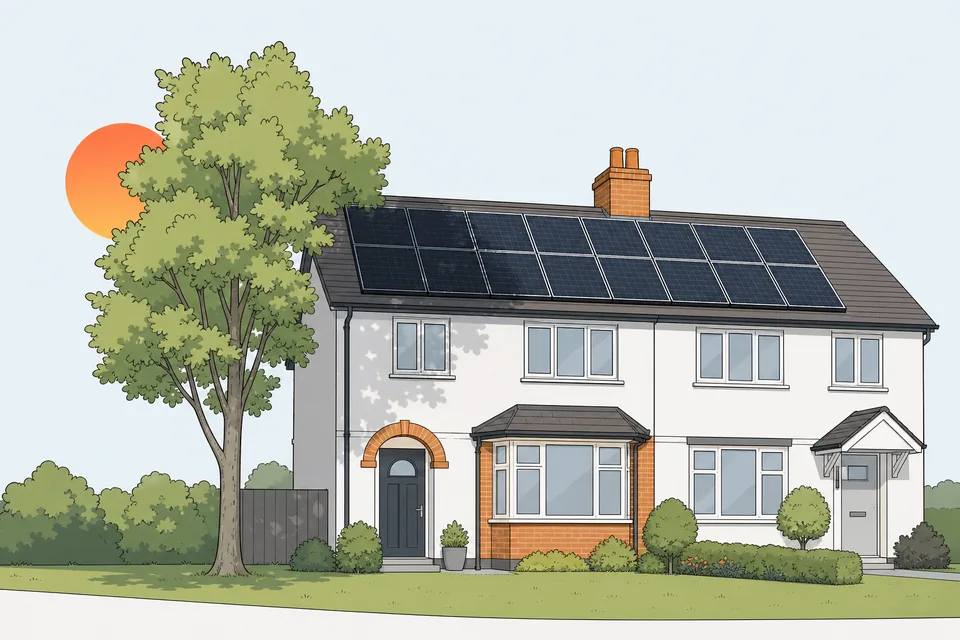
Panels also lose a little output each year: the rate is on the datasheet, and the make and model are on your MCS certificate. A sudden drop that lasts through bright days needs a test: see how to test your panels.
5. Debris and damage: cracks, hot spots and storms
Cracked panels are rare and usually come from an impact. Check from the ground after a storm. Replace a cracked panel quickly: broken glass lets moisture in, which corrodes the cells and wiring, the IEA says.
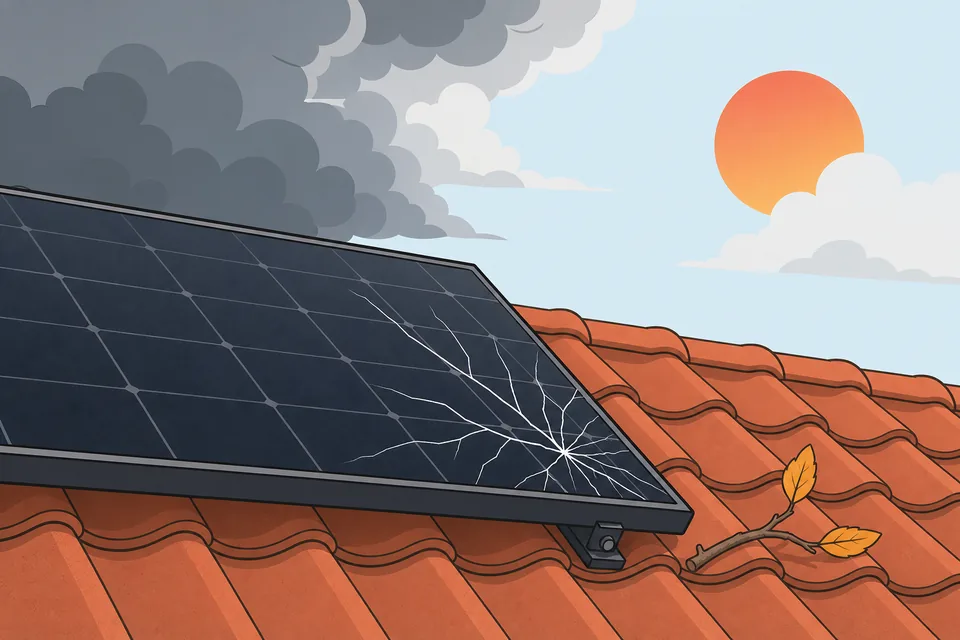
- Burn marks point to a hot spot, a small area that builds up heat, often from a cracked cell or a failed part inside.
- Thin dark lines across cells, called snail tracks, often follow tiny cracks.
- Bubbles or peeling layers, called delamination, can make a panel unsafe.
The maker's product warranty may cover panel faults like these, but perhaps not labour or scaffolding, Which? warns.
6. Dirt, droppings and lost efficiency
Rain washes most grime off, so dirt usually causes only small energy losses. Trouble starts when grime builds up thickly or collects on one panel, Which? says. Check them every 12 to 18 months, and see how to clean solar panels safely from the ground.
7. Birds, rodents and other pests
Birds and squirrels nest in the sheltered gap under panels, and one solar firm told Which? that nesting material can be a serious fire risk.
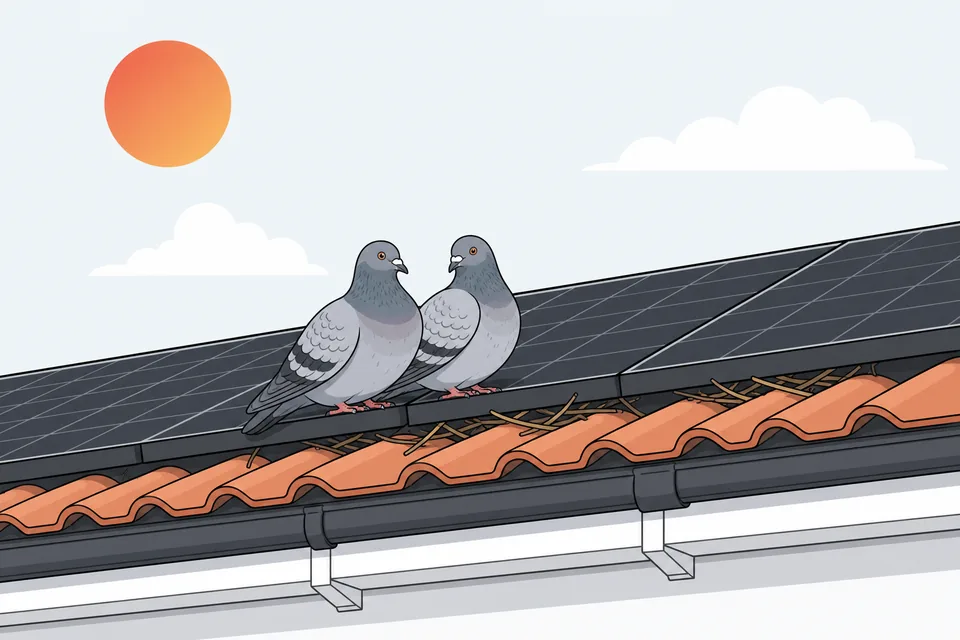
- Wait for nesting to finish. It's an offence to intentionally damage or destroy a wild bird's nest while it's in use or being built.
- Then proof the edges. Bird or pest protection solutions close the gap. Which? says they're much cheaper fitted with the panels than added later.
- Don't drill the frames. Fixings in a panel frame can affect its warranty.
Installation, monitoring and battery faults
After your own quick checks, call the firm that fitted your system.
8. Poor installation and roof leaks
The MCS solar PV standard says a system should not affect the building's weather tightness.
BRE put about 36% of the fire incidents caused by PV systems down to how they were installed. Report damp patches, drips or loose fixings near the panels to the firm that fitted them.
9. Monitoring, meter and battery faults
The monitoring app shows nothing
A new router can break the Wi-Fi link. If the inverter's own screen shows today's generation, only the app needs reconnecting.
The generation meter has stopped
If the inverter shows generation but the meter doesn't, the meter has probably failed. Feed-in Tariff owners need its readings to get paid, so get it replaced.
Low or uneven charging
Battery storage charges from solar only when your home has power to spare. Mode settings or current sensors fitted the wrong way round can also stop it, Tesla's troubleshooting guide shows. For help, ask the company you bought the system from.
Who fixes it, and who pays?
Start with the company that fitted your system. MCS says contact them first, and 14 days is a reasonable maximum time to wait for a reply.
- A faulty part falls under the maker's warranty (for panel issues, the panel maker's product warranty).
- Poor workmanship falls under the fitting firm's workmanship warranty, usually 2, 5 or 10 years long, and should be fixed free.
- If the company has closed, claim on its insurance-backed warranty, which RECC members must have. Look for the insurer in your paperwork and your MCS certificate, which may name it. Most want defects reported within 30 days of finding them.
- Still stuck? Escalate to MCS. It aims to resolve most complaints within 8 weeks, and independent dispute resolution is free for eligible disputes.
While the original firm is trading and your warranty is valid, only bring in another if it refuses to help. Otherwise you risk voiding the cover, the Renewable Energy Consumer Code (RECC) warned in 2017. Use an MCS certified firm and agree its prices in advance.
These steps are for residential systems; for commercial ones, check your contract.
What can you safely check yourself?
Quite a lot, from the ground.
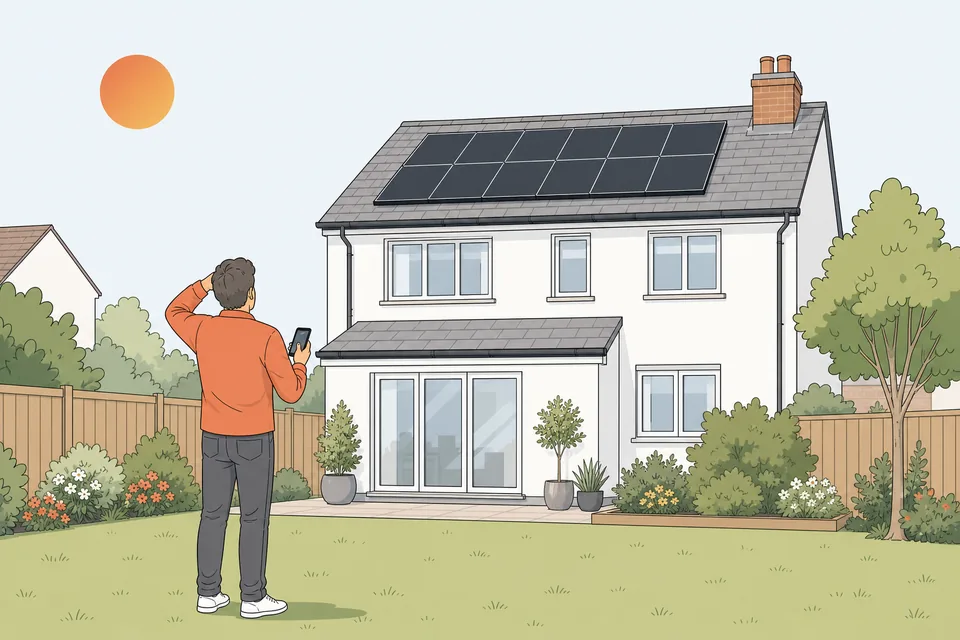
- Note the generation reading each month and compare it with last year.
- Check the inverter screen or app for warning lights and error codes.
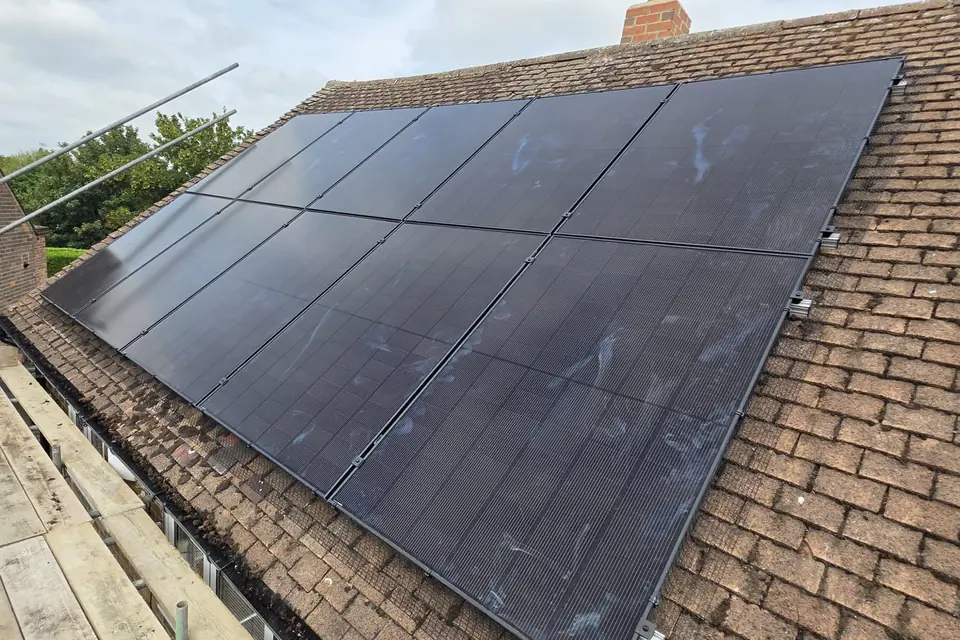
- Look at the panels from the ground for cracks, burn marks, nests or heavy grime.
Apart from switching off in an emergency, leave the roof, the inverter, isolators, cables and battery to professionals. A professional inspection every 3 to 5 years can catch small cracks or inverter issues, says the Energy Saving Trust. See what servicing costs and covers.
Planning a new solar system?
We're MCS certified, and the panels we fit carry a 25-year product warranty and a 30-year performance warranty. Free quote, no pressure to sign.
Or call 0333 577 6576, Monday to Friday, 9am to 5pm. We'll only use your details for your quote. Privacy policy
Questions people ask
Why are my solar panels not working?
Usually an inverter fault, a tripped switch, a power cut or a wiring problem. If the inverter shows an error or nothing at all, contact the company that fitted the system.
About this guide
Written by the SolarSave team in Retford: MCS certified installers, led by a founder in solar since 2010. We checked every fact against Which?, the Energy Saving Trust, MCS, RECC, BRE, GOV.UK and the makers' own documents on 16 November 2026. Rules and warranty terms change, so check your own paperwork too.
The 20 sources we checked
- Which?: Solar panel problems and how to solve them, 26 March 2026, checked 16 November 2026
- Which?: The three most common solar panel problems (survey of members, April 2024), 25 July 2024, checked 16 November 2026
- Which?: Solar panel battery storage, 30 October 2026, checked 16 November 2026
- Energy Saving Trust: How to clean and maintain solar panels, updated 1 October 2026, checked 16 November 2026
- Electrical Safety First: Electrical safety advice for solar panels, checked 16 November 2026
- Lancashire Fire and Rescue Service: If you have a fire, checked 16 November 2026
- BRE: Solar panel systems and fire safety, 11 November 2013, checked 16 November 2026
- BRE National Solar Centre for the government: Fire and solar PV systems, investigations and evidence (issue 2.9), 11 May 2018, checked 16 November 2026
- Trina Solar: Vertex series module user manual (UM-M-0002), August 2026, checked 16 November 2026
- IEA PVPS Task 13: Review of failures of photovoltaic modules, March 2014, checked 16 November 2026
- legislation.gov.uk: Electricity Safety, Quality and Continuity Regulations 2002, regulation 27, checked 16 November 2026
- Sunsynk (inverter maker): UK grid voltage, checked 16 November 2026
- UK Power Networks: Power cuts, voltage issues and your low carbon technologies, checked 16 November 2026
- DESNZ: Feed-in Tariff load factor analysis 2024/25, 18 December 2025, checked 16 November 2026
- MCS: MIS 3002 Solar PV installation standard, issue 1.0, 1 January 2025, checked 16 November 2026
- GOV.UK: Wild birds, protection and licences, 29 March 2015, checked 16 November 2026
- Tesla: Powerwall 3 is not charging from solar (maker's troubleshooting guide), checked 16 November 2026
- MCS: What to do if things go wrong, 7 September 2026, checked 16 November 2026
- RECC: About deposit and workmanship warranty protection, checked 16 November 2026
- RECC: FAQs on faulty or underperforming system issues, version 1.0, April 2017, checked 16 November 2026