

How much comes off your energy bills?
A typical home, panels only
£190 to £330
a year off your bill
MoneySavingExpert, from Energy Saving Trust figures for a 4.5 kWp system. The catch: you only save on the solar you use.
Export payments on top
£200 to £390
a year, at a 12p export rate
Which?'s examples for a 4.6 kWp system, from June 2025. The catch: you must apply for an export tariff, and the best rate open to anyone was 13p when we checked.
What solar can't cut
About £200
a year in standing charges
54.83p a day under Ofgem's October to December 2026 cap. The catch: you pay it whatever your panels make.
MoneySavingExpert (updated 28 September 2026), Which? (3 November 2026) and Ofgem, checked 16 November 2026. Your roof and use will differ.
How much do solar panels save a year?
About £190 to £330 a year off a typical bill, says MoneySavingExpert, using Energy Saving Trust figures for a 4.5 kWp system and 2,500 kWh of use a year. That annual saving is before export payments, which added £200 to £390 a year in Which?'s examples below, at a 12p export rate.
Which?'s worked examples split the saving between your bill and your export payments:
| City and roof | Bill saving | Export payments | Total |
|---|---|---|---|
| London, south-facing, no shade | £285 | £370 | £655 |
| London, east-facing, some shade | £225 | £235 | £460 |
| Cardiff, south-facing, no shade | £285 | £390 | £675 |
| Cardiff, east-facing, some shade | £225 | £245 | £470 |
| Edinburgh, south-facing, no shade | £270 | £335 | £605 |
| Edinburgh, east-facing, some shade | £210 | £200 | £410 |
An east-facing, partly shaded roof cuts the bill saving by about £60 a year, but export payments by £135 to £145. A sunnier roof mostly makes more to export, because a household can only use so much electricity at midday.
Which? assumes a 4.6 kWp, ten-panel system and someone in during the day. Its figures use 2,500 kWh of electricity, 25.8p a unit and exports at 12p, at 1 June 2025 prices.
A Trustpilot reviewer wrote in March 2024: "the panels are definitely saving me money".
Where do the savings come from?
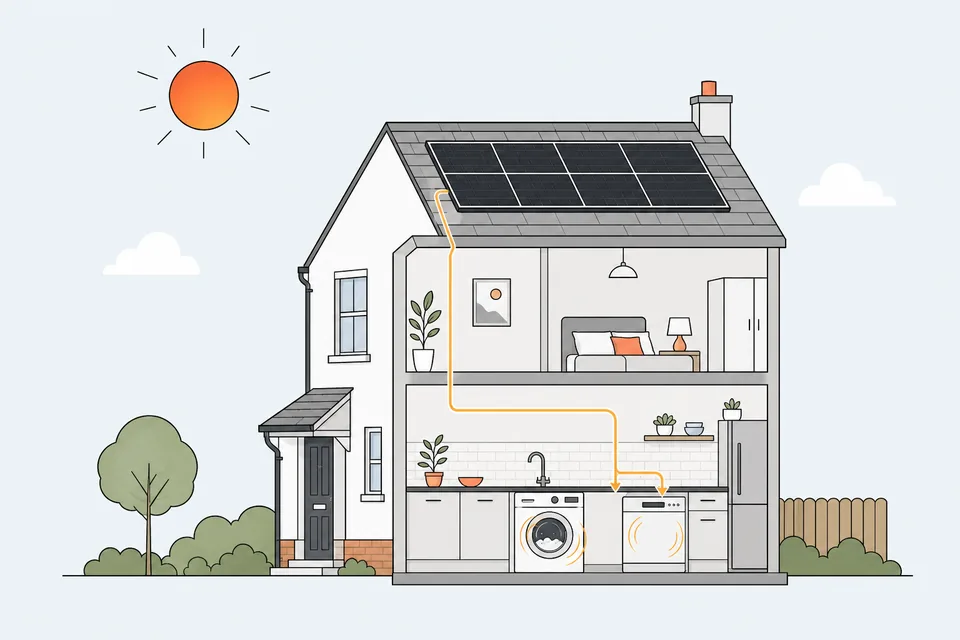
Solar panels can reduce annual energy bills in two ways: electricity you don't buy, and payments for what you export. Using your solar is worth more than exporting it.
- Solar you use replaces purchased electricity, so it saves the unit rate: 26.32p a unit (kWh) under Ofgem's October to December 2026 price cap.
- Solar you export earns your export rate: the best rate open to anyone was 13p when we checked on 3 November 2026.
So each unit you use is worth about twice as much as one you export. That's why the biggest savings go to homes that use solar power while it's being made.
Export payments aren't automatic. You apply to a supplier under the Smart Export Guarantee (SEG), and it doesn't have to be the company you buy electricity from. You need a meter that records half-hourly exports, usually a smart meter, and an MCS certified installation and installer. Compare rates in our best SEG tariffs guide.
What decides your savings at home?
It depends most on how much of your solar you use yourself, which the industry calls self-consumption. Four things decide it:
- When you're home. MCS, the scheme that certifies solar installers, sorts homes into home all day, in half the day and out all day.
- How much electricity you use. Ofgem's typical yearly figures for a single-rate meter are 1,600 kWh (low), 2,500 kWh (medium) and 3,800 kWh (high). Your bill shows yours.
- What your roof makes. That depends on the system's size, the roof's direction and pitch, and any shade.
- Your tariffs. What you pay for each unit, and what you're paid to export.
MCS's worked examples, priced at today's rates
We've priced the worked examples in MCS's savings estimate standard, MCS 032, at current rates: 26.32p a unit and a 13p export rate.
| MCS example | Solar made | Used at home | Bill saving | Export payments | Total |
|---|---|---|---|---|---|
| Home all day, uses 3,500 to 3,999 kWh, no battery | 4,059 kWh | 29% (1,177 kWh) | £310 | £375 | £685 |
| Home all day, uses 3,500 to 3,999 kWh, 7.5 kWh battery | 4,059 kWh | 69% (2,801 kWh) | £737 | £164 | £901 |
| In half the day, uses 5,500 to 5,999 kWh, no battery | 2,456 kWh | 39% (958 kWh) | £252 | £195 | £447 |
| In half the day, uses 5,500 to 5,999 kWh, 5.1 kWh battery | 2,456 kWh | 88% (2,161 kWh) | £569 | £38 | £607 |
In the home-all-day example, a battery lifts the share of solar used at home from 29% to 69%, and the yearly total by about £216. We've ignored battery losses, so the battery rows are a little high. These are MCS's examples, not a prediction for you.
What does a battery add to your savings?
About £93 to £102 a year from stored solar, in MoneySavingExpert's example of a ten-panel, 4.6 kWp system with someone in during the day. Charging it on a cheap overnight tariff can save more. A battery stores daytime solar for the evening, so you use more of it yourself.
Why less than the £216 in MCS's example above? That example has 7.5 kWh of storage, and we priced its exports at 13p. MoneySavingExpert uses batteries of 3 kWh to 7 kWh and a 15p export rate. So each unit used rather than exported is worth about 11p.
- MoneySavingExpert says a 3 kWh to 7 kWh battery costs £3,500 to £5,500 installed.
- It says a battery probably won't cover its cost for a typical user. But it could work better for households on Economy 7, or with an electric car or a heat pump.
Peter W., one of our customers, wrote on Google in November 2025: "we are now (hopefully) getting the full benefit of overnight cheap rate electricity powering batteries and day time the batteries powering the house".
Our solar and battery systems are fully installed from £7,500 (10 panels, a Fox ESS battery and scaffolding to one side), including VAT. See solar panels and a battery, and are solar batteries worth it?
How can you check an installer's savings estimate?
Ask for the written performance estimate. Under MCS 032, installers certified under MCS's 2025 rules must give you one before you sign.
It must show how much your system should make a year, worked out from its size, your area, the roof's pitch and direction, and shading. It must show how much of that you'd use, from MCS's tables for your household type. And it must say it isn't a guarantee, because solar performance "is impossible to predict with certainty".
Then check:
- Your real yearly use. If it isn't known, MCS assumes 3,500 kWh, well above Ofgem's typical 2,500 kWh. Give them the figure from your bill.
- Your household type. If it isn't known, MCS uses "in half the day".
- Extra loads. MCS's tables leave out electric cars, heat pumps and solar diverters, so these are worked out on top.
- The prices used. The unit rate and export rate behind any expected savings should match yours.
You'll also need your MCS certificate for export payments: see what is an MCS certificate?
Susan S. wrote on Trustpilot in October 2025: "James made everything transparent and easy to understand what savings we will make."
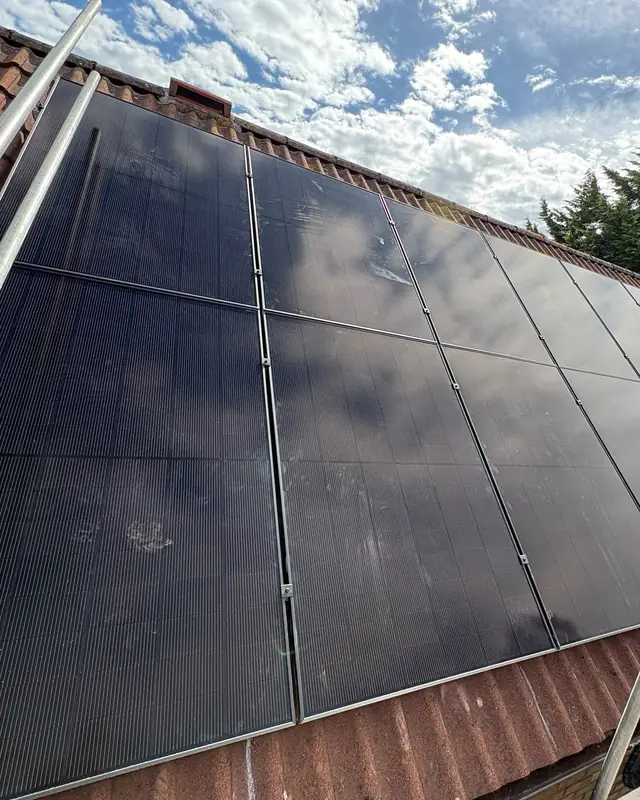
Get a savings estimate for your roof
Your free quote includes an estimate of what your roof will generate, so you can work out your own savings. No pressure to sign.
Or call 0333 577 6576, Monday to Friday, 9am to 5pm. We'll only use your details for your quote. Privacy policy
What can't your panels cut from the bill?
The standing charge, and most of the electricity you use at night and in winter. Solar panels reduce your bill, but they can't clear it.
- The standing charge: 54.83p a day under the October to December 2026 cap, about £200 a year, whatever your panels make.
- Night-time use: home solar panels make nothing after dark, so your electricity comes from the grid, or from a battery.
- Winter: in 2025, UK solar panels made 2.1 TWh from October to December, out of 20 TWh for the year. That's about a tenth.
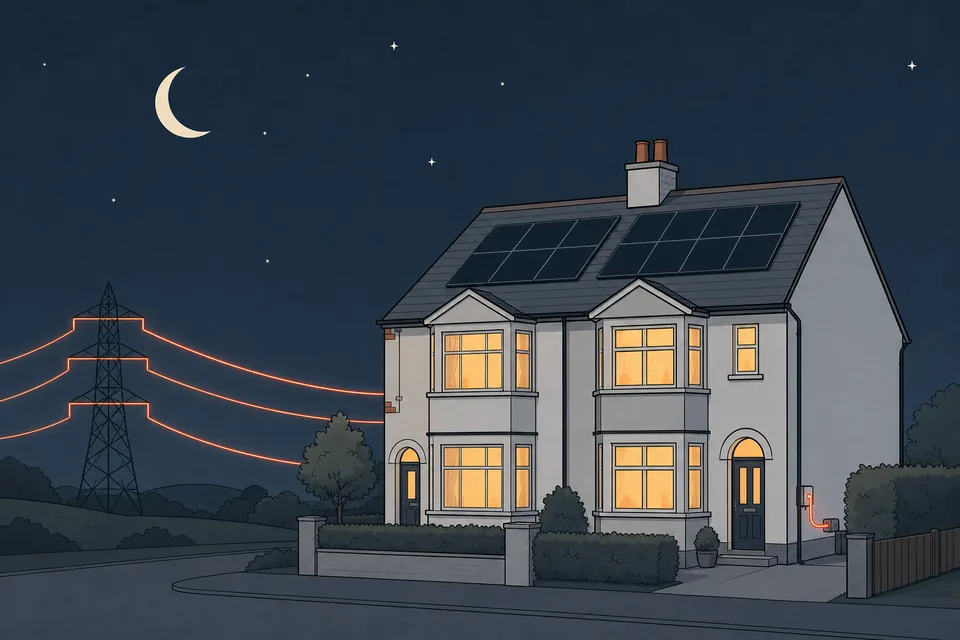
So you'll still get a bill, just a smaller one. See why your electric bill can still be high with solar panels.
Six energy saving tips for solar homes
Use more of your own solar, and get paid well for the rest.
1. Run big appliances while the sun's up
Time the washing machine, dishwasher or tumble dryer for the middle of the day. MoneySavingExpert advises shifting as much use as you can to when your panels are generating.
2. Choose a good export tariff
Tariffs open to anyone paid from 2p to 13p a unit when we checked on 3 November 2026. Compare them in our best SEG tariffs guide.
3. Size a battery to your evenings
Match it to what you use after dark, not to the biggest one available. See what size solar battery do I need?
4. Charge an electric car in daylight
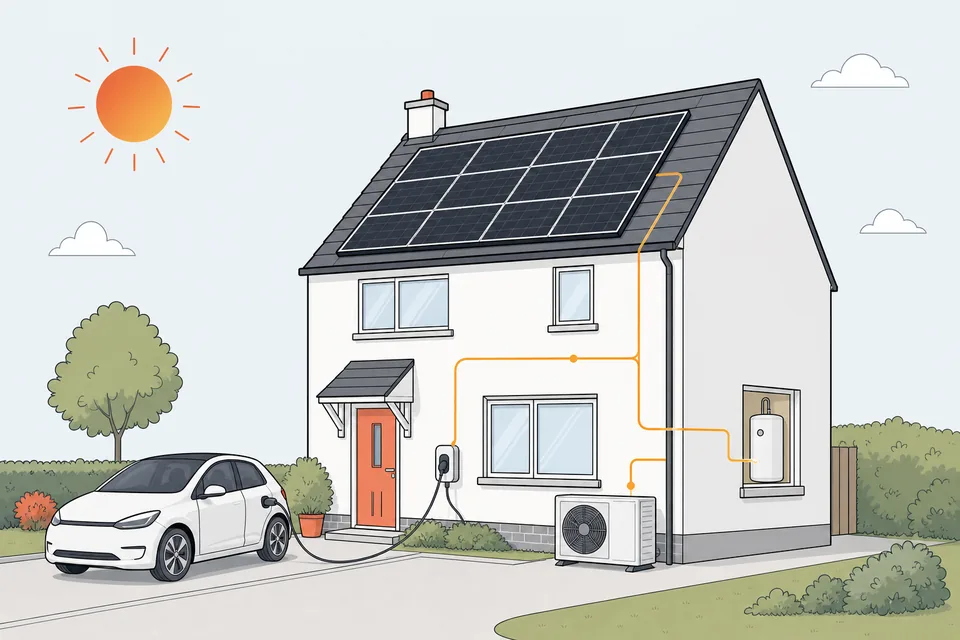
Charging at weekends, or when you work from home, uses solar you'd otherwise export. See can solar panels charge an electric car?
5. Heat water with a diverter
A solar diverter sends spare solar to the immersion heater in your hot water cylinder. MCS's figures leave diverters out, so ask for their effect to be shown separately.
6. Charge a battery on a cheaper overnight tariff
Some tariffs sell electricity more cheaply overnight. A battery can charge then and run the house in the morning, alongside your solar.
What's the payback period, and the long-term savings?
The payback period is about 9 to 12 years, including export payments, on MoneySavingExpert's figures for a typical system with an upfront cost of around £7,600. A battery can add years to that. Panels can last around 25 years, MoneySavingExpert says, so the savings carry on for years after that.
Our guide are solar panels worth it? covers costs and the homes where solar isn't worth it.
Questions people ask
What's a typical yearly saving in the UK?
About £190 to £330 a year off a typical bill, MoneySavingExpert says, using Energy Saving Trust figures for a 4.5 kWp system. Export payments add more: £200 to £390 a year in Which?'s examples, at a 12p export rate.
Is it better to use solar electricity or export it?
Use it, in most cases. Each unit you use saves 26.32p at the October to December 2026 price cap. The best export rate open to anyone was 13p when we checked on 3 November 2026.
How much does a battery add to solar savings?
MoneySavingExpert puts it at about £93 to £102 a year from stored solar, for a ten-panel, 4.6 kWp system, before any cheap overnight charging. In an MCS worked example, 7.5 kWh of storage lifts the share of solar used at home from 29% to 69%.
Do solar panels get rid of your electricity bill?
No. You still pay the standing charge, about £200 a year at the October to December 2026 cap. You also buy electricity at night and in winter, unless a battery covers some of it.
How much are solar savings per month?
Divide a saving of £190 to £330 a year by 12, and it averages about £16 to £28. Summer months save much more and winter months much less: in 2025, October to December made only about a tenth of the year's UK solar electricity.
About this guide
Written by the SolarSave team in Retford: MCS certified installers, led by a founder in solar since 2010. We checked every figure against its source on 16 November 2026. Ofgem announces the next price cap, for 1 January to 31 March 2027, on 25 November 2026, and we update the prices on this page when it changes.
The 10 sources we checked
- MoneySavingExpert: Solar panels, are they worth it?, updated 28 September 2026, checked 16 November 2026
- MoneySavingExpert: Is solar battery storage worth it?, updated 1 October 2026, checked 16 November 2026
- Which?: Are solar panels worth it?, 3 November 2026 (prices at 1 June 2025), checked 16 November 2026
- Ofgem: Energy price cap, 1 October to 31 December 2026, 26 August 2026, checked 16 November 2026
- Ofgem: Review of typical domestic consumption values, decision, May 2026, values from 1 July 2026, checked 16 November 2026
- MCS: MCS 032 Solar PV and battery pre-sale information and system performance estimate standard, issue 1.0, 1 January 2025, checked 16 November 2026
- GOV.UK: Smart Export Guarantee, updated 19 October 2026, checked 16 November 2026
- Ofgem: Smart Export Guarantee, generators, checked 16 November 2026
- Fuse Energy: Single Rate Variable Export (13p, open to anyone), rate checked 3 November 2026
- DESNZ: Energy Trends March 2026 (solar generation in 2025), 2 April 2026, checked 16 November 2026