

In short
- Monthly: read your app or meter, and compare it with the same month last year.
- Every 12 to 24 months: look the system over from the ground. Clean only if dirt builds up.
- Every 3 to 5 years: a full professional service, says the Energy Saving Trust (EST).
- Your handover pack holds your system's own schedule, and it comes first.
- Never climb on the roof or touch the cables from the panels.
| When | What to do | Who | Source |
|---|---|---|---|
| Every month | Read the app or meter. Check the inverter for fault lights. | You, indoors | Our advice |
| After a storm | Look for slipped panels, loose cables or debris. | You, from the ground | Our advice |
| Every 12 to 24 months | Inspect the panels, fixings and visible wiring. Clean if needed. | You or a professional | EST |
| Every 3 to 5 years | A full professional check for cracks and inverter faults. | Installer or solar electrician | EST |
| At least every 10 years | An electrical check of the home (EICR). Ask about the solar PV too. | Qualified electrician | ESF; our advice |
| After 10 to 15 years | Expect to replace the inverter. | Installer | EST |
| Your system | Follow the schedule in your handover pack. | You and your installer | MCS |
How much care do solar panels need?
Very little. Which? expects solar panels to be low maintenance: they "should work efficiently without an annual service (unlike your boiler)".
Solar systems require maintenance mainly so a fault gets spotted early, before it costs you much output. They require professional checks only every few years.
Solar panels are built to last: the EST puts their lifespan at around 30 years. The ones we fit carry a product warranty of 25 years and a performance warranty of 30 years.
Proper maintenance is essential when a warranty depends on it. The EST notes that some installers require a full service within a set period to keep their warranty valid.
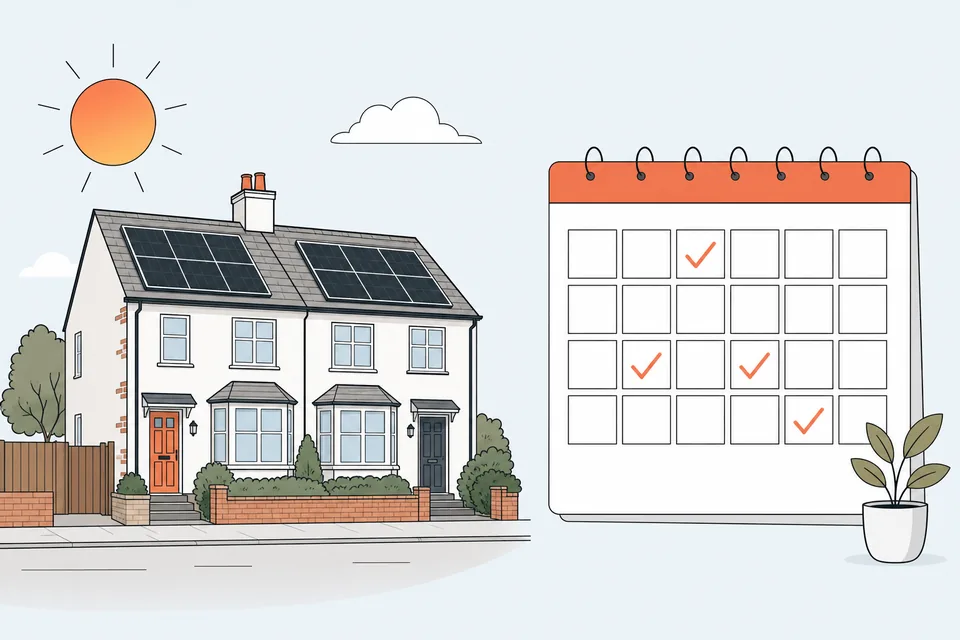
Every month: check system performance
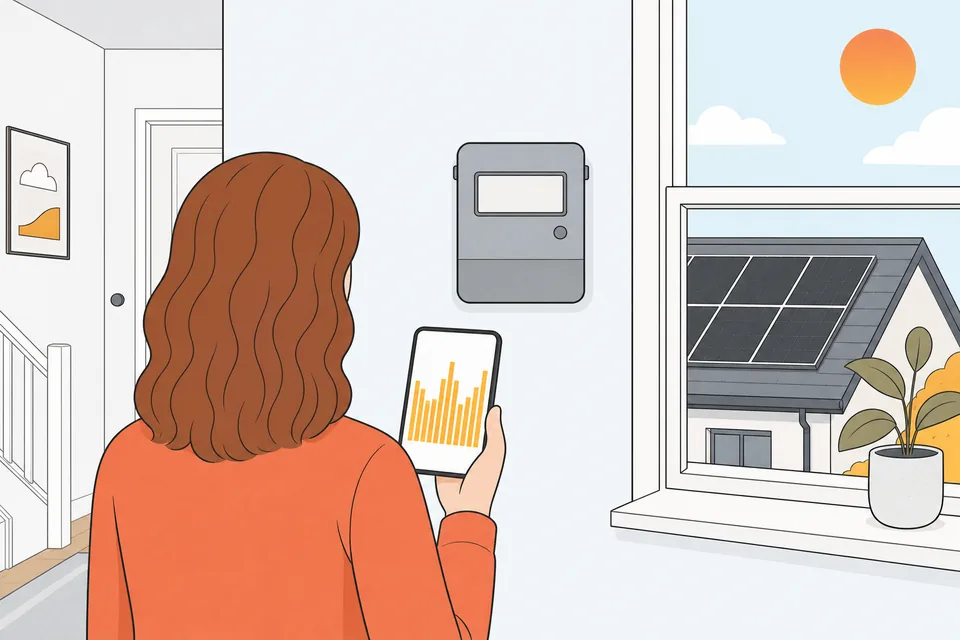
Once a month, read your generation meter or monitoring app. It takes a few minutes, indoors. MCS's standard for installers, MIS 3002, requires a way to record and display what the system makes. It should be readable without "a tool, ladder or torch".
- Compare like with like. Check this month against the same month 12 months ago, because the seasons change output.
- Check the annual total. Compare 12 months' output with the estimated annual generation (EAG) on your MCS certificate.
- Look at the inverter. A fault light or error code is worth a call to your installer. If you have a battery, check the app shows no faults for it too.
MIS 3002 also says there should be a way to tell you within 48 hours if the system stops, or starts working abnormally. Ensure those alerts reach your phone. Our guide on how to test a solar panel shows what a normal reading looks like.
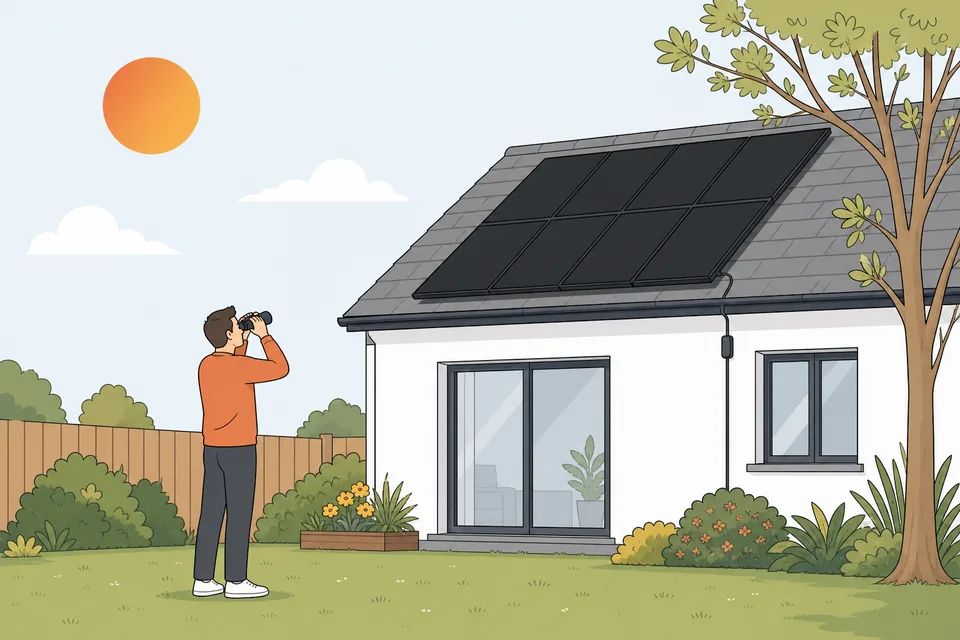
Every 12 to 24 months: a look from the ground
The EST suggests a look every 12 to 18 months, and an inspection at least every two years. Check the panels, mounting system and visible wiring, or have a professional do it.
Areas you can check from the ground
- Cracks or other damage to the glass and frames.
- Fixings that look loose, or roof edges letting water in.
- Cables that are chewed, sagging or loose.
- Grime, droppings or lichen building up.
- Branches growing into the sunlight.
Shade and grime cut the light reaching the cells, which lowers efficiency. The EST suggests keeping branches trimmed, and says a light clean every 12 to 24 months can help a system work at its best.
For maximum efficiency, the EST says to clean whenever dirt or debris builds up. Our guide to cleaning from the ground shows how to keep panels clean.
Seasonal solar maintenance
Autumn and winter
After stormy weather, look for slipped panels or loose cables. Leave snow to melt, and never brush it off from a ladder. Our guide to winter output explains why figures drop.
Spring and summer
Birds may nest under the array in the breeding season. It's an offence to intentionally damage or destroy a wild bird's nest while it's being used or built. So fit any mesh before nesting starts or after it ends.
The EST says to clean more often if dust, birds or lichen are a problem locally. Plan any clean for cool weather, in the morning or late afternoon.
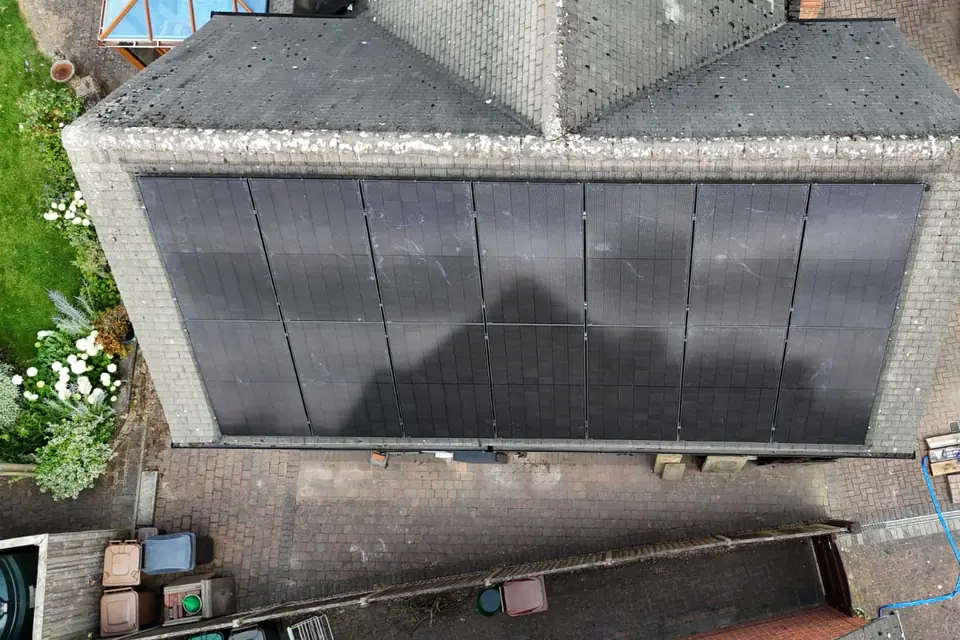
What to leave alone: the roof and the wiring
Never go on the roof, and never touch the wiring. Both are jobs for a qualified installer.
- The roof. The EST says it's safer to avoid working at heights, and not to stand on panels, which can have slippery coatings.
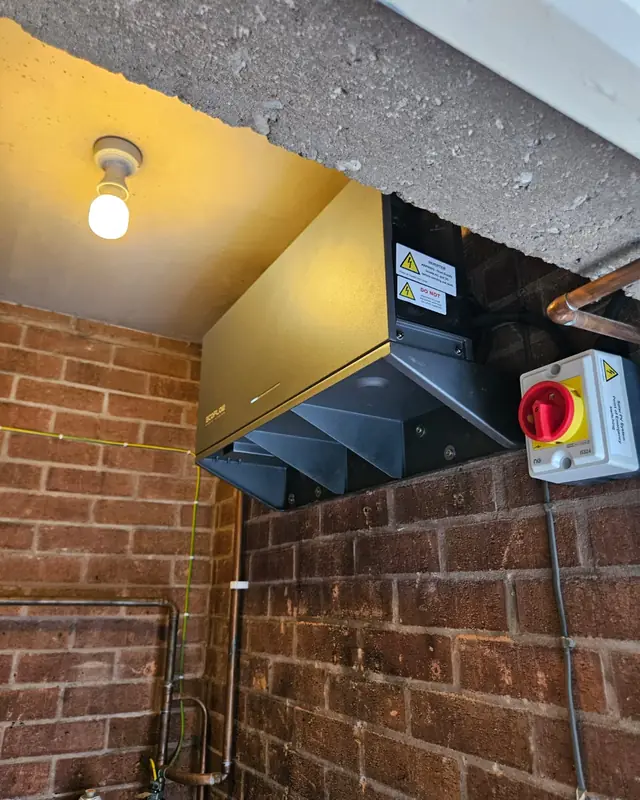
- The cables from the roof. They carry direct current (DC). BRE (the Building Research Establishment) says the DC supply stays live in daylight, from the panels to the DC isolator.
- Inside the inverter. Read its screen, but leave covers and connections alone.
- Damaged cables. The EST says to stop and report them to your installer straight away.
Switch the system off before any cleaning, as the EST advises. If a check turns up a fault, see common solar panel problems. Panel repairs under warranty go back to the installer or the maker.
Every 3 to 15 years: the professional checks
- Every 3 to 5 years: a full service. The EST suggests one to look for small cracks or inverter issues. Check whether your warranty sets a deadline.
- At least every 10 years: an electrical check. Electrical Safety First (ESF), the electrical charity, recommends a full check of the wiring at least every 10 years for an owner-occupied home. It's called an EICR. Government guidance for landlords says solar PV may need a separate inspection by an appropriately qualified person, so ask for a solar PV electrician.
- After 10 to 15 years: a new inverter. The EST says inverters typically need replacing in that time.
On price, the EST puts a new inverter at around £800. Our guide to solar panel service costs covers the rest, including the electrical check landlords in England need at least every 5 years.
Want to keep more of what your panels make? See adding storage to the panels you have.
Thinking about solar for your home?
Free consultation, a written quote with the full price, and a handover pack when your system is fitted. No pressure to sign.
Or call 0333 577 6576, Monday to Friday, 9am to 5pm. We'll only use your details for your quote. Privacy policy
What your handover pack and MCS say
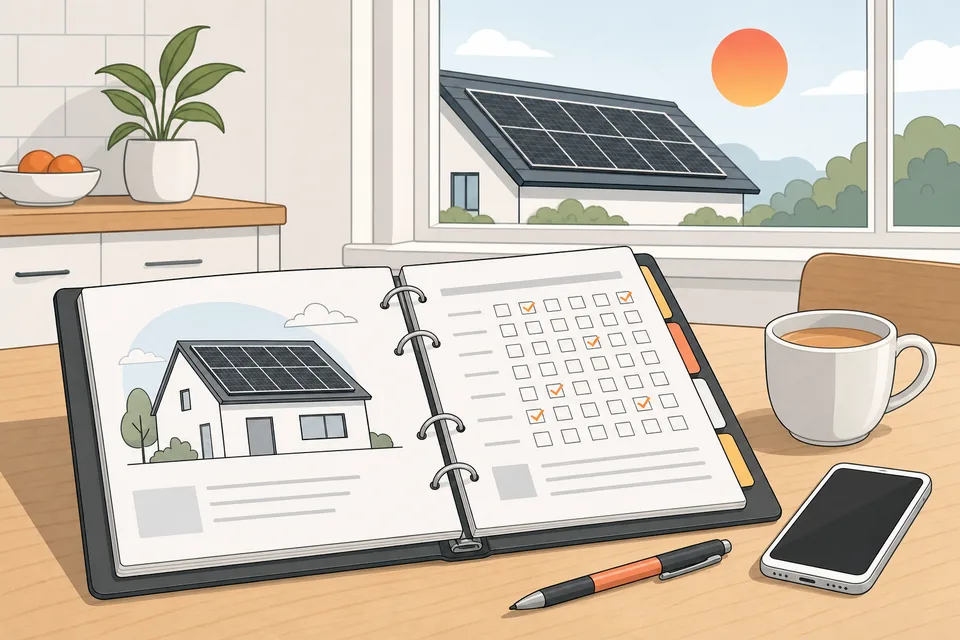
Your handover pack is your system's own schedule, and it beats general advice like ours. The MCS Customer Commitment (January 2025) sets what the pack must hold, as a minimum. That's a list of key parts, makers' manuals, all guarantees and warranties, advice on using the system safely, and a recommended servicing and maintenance schedule.
The installer must also:
- Tell you if anything is needed to keep warranties valid.
- Say whether there will be ongoing checks or monitoring.
- Explain who to contact if anything goes wrong.
- Put right defects caused by the installation work.
Look for a next inspection date too. MIS 3002's model handover form has a box for "Next inspection recommended after not more than" a number of years. If your pack has it, follow it.
Lost your paperwork? Ask your installer for a copy, and see what an MCS certificate is.
If we fitted your solar panel system
We email your handover pack within 7 working days, and stay on hand afterwards. If a reading looks wrong, call us on 0333 577 6576, Monday to Friday, 9am to 5pm.
"Excellent communication from quotation to post installation."
Bryan G., Google, October 2026
Questions people ask
How often should a solar panel system be serviced?
Every 3 to 5 years, says the Energy Saving Trust, unless your handover pack or warranty asks for something else.
Do solar panels need cleaning?
Only when you can see grime building up. The Energy Saving Trust suggests an inspection every 12 to 24 months, with a clean if needed.
Is an annual check a legal requirement?
No. Which? says cold callers who claim a yearly check is a government requirement are wrong.
What happens if I skip maintenance?
Usually very little, as solar panels need little care. The risks are a fault nobody notices and, if your installer required servicing, a lapsed warranty. Regular maintenance is mostly reading the monthly figures.
About this guide
Written by the SolarSave team in Retford: MCS certified installers, led by a founder in solar since 2010. We checked every interval and rule against the Energy Saving Trust, MCS, Electrical Safety First, GOV.UK, the BRE and Which? on 16 November 2026. Your installer's handover pack comes first for your own system.
The 11 sources we checked
- Energy Saving Trust: How to clean and maintain solar panels (maintenance checklist), updated 1 October 2026, checked 16 November 2026
- Which?: Beware these solar panel cold calls, 29 August 2024, checked 16 November 2026
- MCS: Customer Commitment, issue 1.0 (sections 2 and 5), 1 January 2025, checked 16 November 2026
- MCS: MIS 3002 Solar PV installation standard (clause 3.7 and Appendix C), issue 1.0, January 2025, checked 16 November 2026
- MCS: MCS certificate queries (estimated annual generation), updated 20 October 2026, checked 16 November 2026
- Electrical Safety First: About us (registered charity 257376), checked 16 November 2026
- Electrical Safety First: How often should a privately owned home have its electrics checked?, checked 16 November 2026
- GOV.UK: Electrical safety standards in the private and social rented sectors, guidance (England), 1 November 2025, updated 20 October 2026, checked 16 November 2026
- BRE: Solar panel systems and fire safety, 11 November 2013, checked 16 November 2026
- BRE: About us, checked 16 November 2026
- GOV.UK: Wild birds, protection and licences, updated 29 March 2015, checked 16 November 2026