

| Solar thermal | Solar PV | |
|---|---|---|
| What it makes | Warmth for your taps, showers and baths | Electricity for anything in the house |
| Peak efficiency | About 70% of the sunlight it catches | About 22% to 24% |
| Typical cost | Around £5,300 (Energy Saving Trust) | £7,400 for 4.6 kWp (Which?) |
| Saving a year | £100 to £230 (Energy Saving Trust, via Which?) | £605 to £675, with export payments (Which?) |
| Paid for what you export | No | Yes, through the Smart Export Guarantee |
| Works with | A cylinder, plus a boiler or immersion heater | A battery, car charger, heat pump or immersion heater |
| Parts and lifespan | Pumps about 10 years; five or 10-year warranties; no collector lifespan given (Which?, Energy Saving Trust) | Modules around 30 years; inverter replaced after 10 to 15 years (Energy Saving Trust) |
| 0% VAT | Until 31 March 2027 | Until 31 March 2027 |
What's the difference between solar thermal and solar PV?
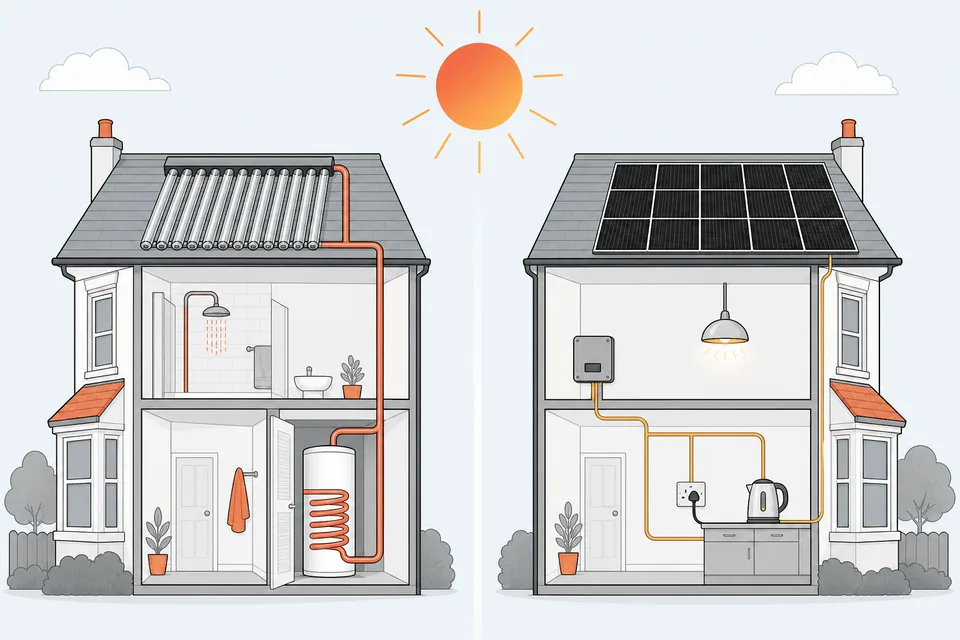
Solar thermal collects sunlight as heat and stores it in your cylinder. PV solar produces electricity for your lights, appliances and anything else you plug in. Both utilise renewable energy from the sun, but they do different jobs.
How a solar thermal system works
Solar thermal systems use sunlight to warm a liquid, a mix of water and antifreeze, in collectors on your roof. A pump moves the warm liquid through a coil in your cylinder and back up to the roof. Solar thermal relies on that cylinder to store what it collects.
There are two kinds of collector:
- Flat plate: fixed on top of your roof tiles, or built into the roof itself.
- Evacuated tubes: a bank of glass tubes on the roof. Which? says they're more efficient than flat plates, so they need less space for the same output.
From the street, thermal panels can look much like the electric kind. But solar thermal collectors don't transform heat into electricity. They only warm your taps, showers and baths, not your radiators, so solar thermal can't power your entire home.
How photovoltaic cells make power
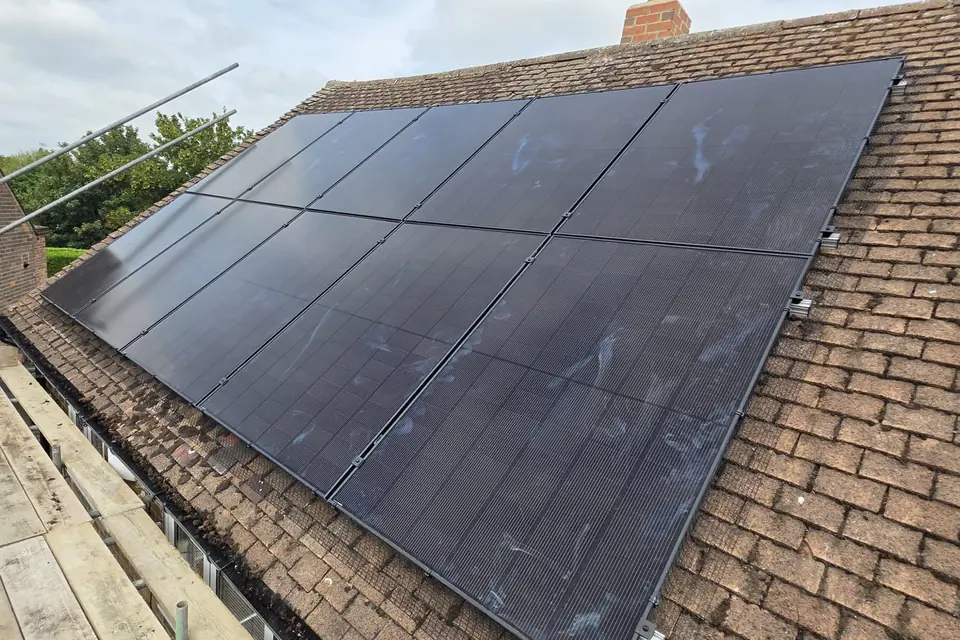
Solar photovoltaic panels use cells, usually made of silicon, that turn light into direct current (DC). An inverter converts it to alternating current (AC), the kind your home uses. Solar cells don't need direct sun, and they still work on cloudy days, says the Energy Saving Trust.
Most home systems use 6 to 12 panels, each making about 400 to 450 W in strong sun. Spare power goes to the grid, or into a battery if you have one.
Which is better for a UK home?
Solar PV, for most homes. It saves more each year, earns money for what it exports, and its power can run anything, including your cylinder's immersion heater. It also gives you more flexibility later.
Solar thermal is worth a look if:
- you already have a cylinder, with room for a solar one beside it or in its place
- several people in your home shower or bathe every day
- your cylinder runs on electricity or LPG, where the Energy Saving Trust puts the saving highest
- you mainly want to burn less gas or oil, with roof left for photovoltaic modules later
PV is the better buy if:
- you have a combi boiler and no cylinder
- you want lower electricity bills all year, not just cheaper water heating in summer
- you'd like a battery, an electric car charger or a heat pump, now or later
- you want to be paid for spare power through the Smart Export Guarantee
Not sure which suits your home? Ask us to talk it through. One customer, Jai A., wrote: "Everything is explained in detail so you make the right choice for a system that fits your needs." (Trustpilot, July 2026).
Thinking about solar for your home?
We design and fit solar and battery systems. Ours start from £4,995 for solar on its own, or are fully installed from £7,500 (10 panels, a Fox ESS battery and scaffolding to one side), including VAT. Free consultation, a written quote, no pressure to sign.
Or call 0333 577 6576, Monday to Friday, 9am to 5pm. We'll only use your details for your quote. Privacy policy
What does each system cost and save?
In the Energy Saving Trust and Which? examples, a photovoltaic setup costs more to fit (£7,400 against £5,300), but it saves far more each year: £605 to £675, against £100 to £230. It pays for itself in about 11 to 12 years on a good roof. Thermal on gas would take decades, on our rough sum.
What it costs to install
- Solar thermal: around £5,300 for a typical system, says the Energy Saving Trust.
- Photovoltaic: £7,400 for a 4.6 kWp system of ten modules, in Which?'s example.
Our own systems start from £4,995 for solar on its own, or £7,500 with a battery (10 panels, a Fox ESS battery and scaffolding to one side), including installation. Prices include VAT, at 0% until 31 March 2027. See solar panel cost for prices by size.
What each saves a year
Thermal savings by fuel
Energy Saving Trust figures, quoted by Which?, put the saving from a 4 m² thermal setup at £100 to £230 a year, on November 2025 energy prices, depending on the fuel the sun replaces:
| Fuel your cylinder uses | Saving a year |
|---|---|
| Electricity | £230 |
| LPG | £200 |
| Gas | £160 |
| Coal | £150 |
| Oil | £100 |
PV savings with export payments
Which?'s 4.6 kWp example, on a south-facing roof with no shade, saves £270 to £285 a year on bills. Export payments add £335 to £390. That's £605 to £675 a year across London, Cardiff, Belfast and Edinburgh.
It assumes June 2025 prices, someone home in the day, 2,500 kWh used a year, 25.8p a unit and a 12p export rate. Which? puts payback at 10 years 11 months to 12 years 2 months. On an east-facing roof with some shade, it's 15 years 8 months to 18 years.
Which? gives no payback time for thermal. Our rough sum: £5,300 divided by £160 a year is about 33 years on gas. With an electric immersion heater, at £230 a year, it's about 23 years.
These sums mix two sources and ignore price changes, so treat them as a guide. The fuller sums are in our guide to whether solar is worth it.
Grants, VAT and export payments
- 0% VAT on both. HMRC's zero rate covers solar collectors, flat plate or evacuated tube, and photovoltaic systems fitted in homes from 1 May 2023 to 31 March 2027. From 1 April 2027 it goes back to 5%.
- Export payments for one only. Ofgem lists five technologies for the Smart Export Guarantee: solar PV, wind, micro-CHP, hydro and anaerobic digestion. Solar thermal isn't one of them. See what is the Smart Export Guarantee?
- We found no national grant for thermal on its own. The Domestic Renewable Heat Incentive closed to new applicants on 31 March 2022. The Boiler Upgrade Scheme pays towards a heat pump or biomass boiler, not solar. England's Warm Homes: Local Grant doesn't list thermal among its examples, and Home Energy Scotland shows no grant for it.
Anything else that's open is in solar panel grants.
Which converts more sunlight into energy?
Thermal, by a wide margin. Solar PV systems generally have lower efficiency rates: about 22% to 24% for a current module, against about 70% for a tested flat plate collector at its best. But you pay for value, not efficiency.
| Product | Type | Peak efficiency |
|---|---|---|
| Worcester Solar Lito (Bosch FCC220-2V), tested 2017 | Flat plate collector | 70.5%, as heat |
| Trina Vertex S+ (450 W to 475 W), 2026 datasheet | Photovoltaic module | 22.5% to 23.8%, as electricity |
Why the efficiency figure flatters thermal
Solar thermal can convert most of the sunlight it catches while the liquid is cool. As your cylinder warms up, the collector loses more warmth to the air. Its Solar Keymark test shows the effect: for Würzburg in Germany, one 2.09 m² collector collects this many kWh a year:
- 1,394 kWh with the liquid at 25°C
- 863 kWh at 50°C
- 486 kWh at 75°C
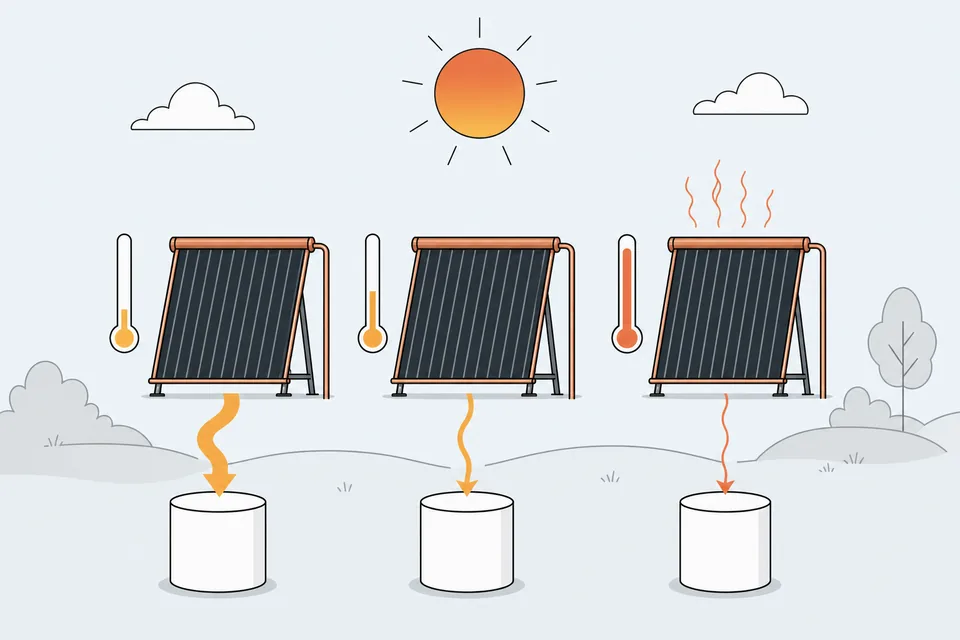
At 75°C, that's about a third of the 25°C figure. A cylinder for showers runs well above 25°C, and Which? says it should reach more than 60°C at least once a week to stop bacteria growing. So in practice, output sits below the 25°C figure.
Why value matters more than efficiency
Photovoltaic cells work on light rather than heat, and they lose a little output as they warm up: 0.29% for each degree, on Trina's datasheet. What matters more is what each unit is worth. Under Ofgem's price cap from 1 October to 31 December 2026, the average Direct Debit unit rates are:
- electricity: 26.32p per kWh
- gas: 7.97p per kWh
A kWh of electricity costs about 3.3 times a kWh of gas, so each unit the modules make replaces something dearer. It can also do any job in the house, while thermal energy can only warm your cylinder.
Will it suit your home and roof?
Thermal needs a cylinder and about 5 m² of roof in direct sun, and rarely works with a combi boiler. A photovoltaic system doesn't depend on your boiler or cylinder.
Does it work with a combi boiler?
Rarely. Few combi boiler models are compatible with solar thermal, says the Energy Saving Trust, because they aren't built to work with a cylinder. With a combi you'd likely need a solar cylinder and either a different boiler or a heat pump. Which? says some newer combis can take pre-heated water, so check with the maker.
With a regular boiler and cylinder, Which? says you'll usually need a second cylinder for the pre-heated supply, or a twin-coil cylinder in place of your current one. It suggests 30 to 60 litres of cylinder for each m² of collector.
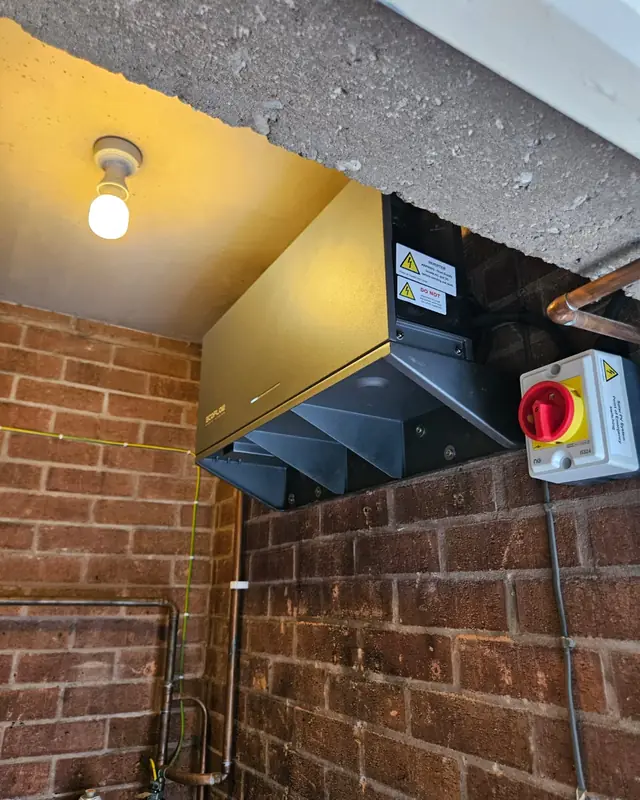
Photovoltaic modules connect to your home's electrical infrastructure through the inverter instead, with no new pipework.
Roof space and planning
Solar water heating needs around 5 m² that gets direct sun for most of the day, says the Energy Saving Trust. Face it south, or anywhere between east and west, but not north.
Which? suggests 1 to 2 m² of collector per person in your home. The Planning Portal puts a typical home system at 3 to 4 m², facing south-east to south-west, and adds that the roof must be strong enough for the weight.
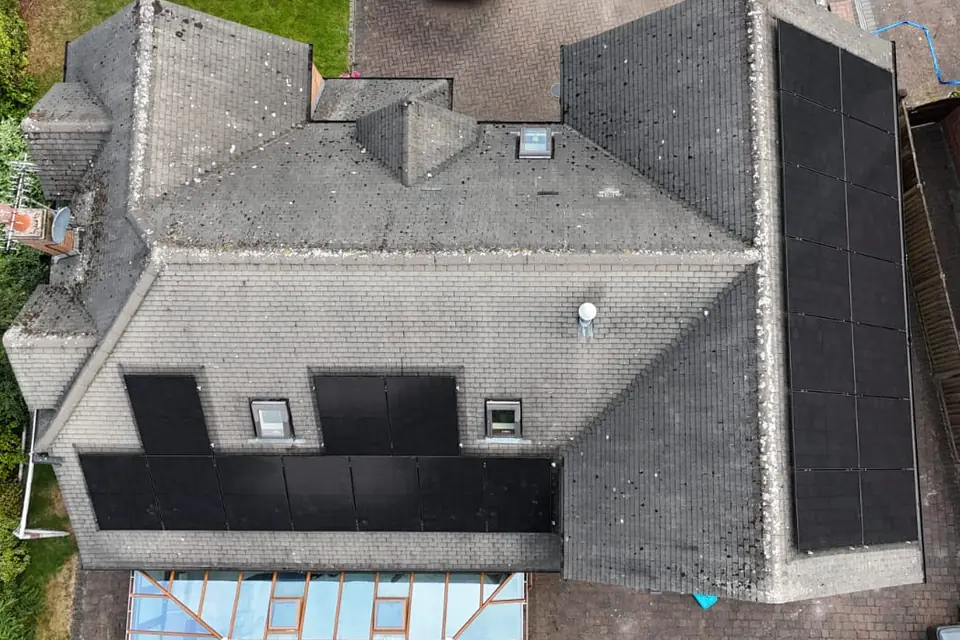
Most thermal systems are permitted development, so they need no planning permission. Listed buildings, conservation areas and national parks are the exceptions. Beyond homes, thermal applications include heating swimming pools, says the Planning Portal. The rules for photovoltaic modules are in our planning permission guide.
Seasons, upkeep and lifespan
Thermal follows the seasons closely. The Energy Saving Trust says it should provide around 90% of what your cylinder needs in summer, dropping to around 25% in winter, and roughly half across the year. Heating your cylinder accounts for around 11% of the average energy bill, which limits what it can save.
Photovoltaic output also drops in winter, but every unit can be used for anything.
- Thermal upkeep: a thorough check every five years to flush the system and replace the fluid, plus a shorter yearly service if you like (Energy Saving Trust). Which? gives pumps around 10 years, and no figure for the collectors.
- Photovoltaic upkeep: check the modules every 12 to 18 months and book a professional service every three to five years. The inverter usually needs replacing after 10 to 15 years, for around £800. The modules themselves last around 30 years (Energy Saving Trust).
Questions to ask an installer:
- Which collector type is it, and how much of the cylinder's yearly need will it cover?
- Will my cylinder or boiler need changing, and is that in the price?
- What will the fluid change and the yearly service cost?
- For photovoltaic modules, what yearly output and export rate does the estimate assume?
- What warranties cover the collectors or modules, the pump or inverter, and the workmanship?
Research the installer on the MCS website before you sign.
Can solar electricity warm your hot water?
Yes. Photovoltaic power can warm your cylinder through its immersion heater.
An immersion heater uses electricity to generate heat inside the cylinder. A solar diverter, sometimes called a PV diverter, automatically sends spare power from your roof to appliances such as immersion heaters, rather than to the grid.
HMRC lists smart diverters as energy-saving materials, so they get 0% VAT when fitted in homes until 31 March 2027.
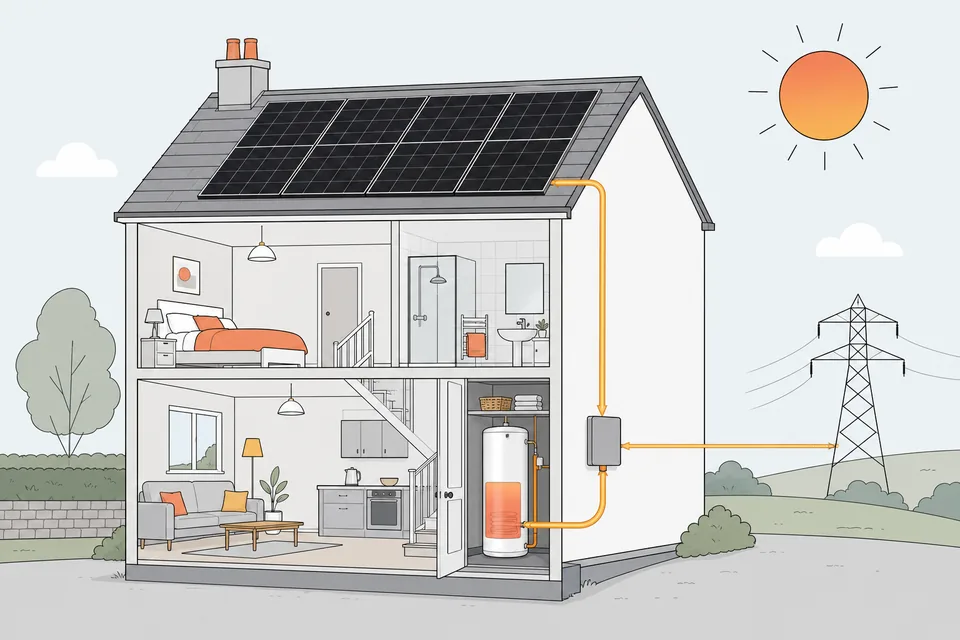
A diverter only uses spare power, so in winter most of the work still falls to your boiler or the grid.
Whether it pays depends on your export rate and fuel. With gas at 7.97p a kWh and an export rate of 12p (the rate in Which?'s example), exporting the spare can be worth more than using it to replace gas. Ask your installer to show both.
Pairing it with a heat pump or a battery
A heat pump runs on electricity, so your roof can supply part of what it uses. Thermal can't help with that: it doesn't warm radiators, so you'd still need another way of heating your home (Energy Saving Trust).
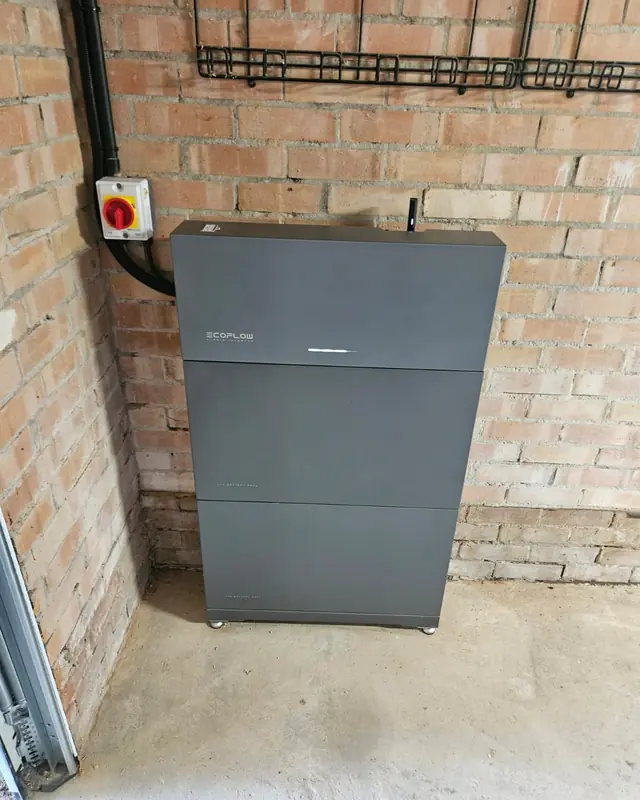
A battery keeps spare power for the evening. We fit solar with or without battery storage: see solar and a battery.
Can you have both?
Yes, if you have a cylinder and the roof has room for both. Thermal collectors can go on one roof slope and photovoltaic modules on another. Weigh the extra cost against a bigger electric system with a diverter.
Our verdict: thermal suits a home with a cylinder heated by electricity or LPG and several people showering every day. For most other homes, photovoltaic modules are the better buy, with a battery or diverter to use more of what they make. Book a free consultation for a written quote.
Questions people ask
Is solar thermal worth it in the UK?
For a few homes. It suits a large household whose cylinder runs on electricity or LPG, where the Energy Saving Trust puts the saving at £200 to £230 a year. On gas, our rough sum puts payback at about 33 years.
Does it cost anything to run?
A little. A thermal system needs a pump, and Which? says pumping costs take about 8% off the savings in most cases. Newer designs cut that to 3% or less.
Do you still need a boiler?
Yes. The Energy Saving Trust says thermal systems usually work alongside a boiler or immersion heater, because the sun's output varies through the year. One of them may also be needed to bring the cylinder above 60°C once a week, as Which? advises.
Do you need an MCS installer for either?
Yes, choose one. The Energy Saving Trust advises an MCS certified installer for thermal systems. For PV, Ofgem's export guidance says suppliers will ask for proof that the system and installer are certified, such as an MCS certificate (see what an MCS certificate is). Every system we fit is MCS certified.
About this guide
Written by the SolarSave team in Retford: MCS certified installers, led by a founder in solar since 2010. We checked every figure against the Energy Saving Trust, Which?, Ofgem, HMRC, GOV.UK, Home Energy Scotland, the Planning Portal, a Solar Keymark test certificate and a panel maker's datasheet on 16 November 2026. Energy prices change every three months, so we update the sums when Ofgem's price cap changes.
The 16 sources we checked
- Energy Saving Trust: Solar water heating, checked 16 November 2026
- Energy Saving Trust: Solar panels, checked 16 November 2026
- Energy Saving Trust: How to clean and maintain solar panels, updated 1 October 2026, checked 16 November 2026
- Which?: Solar water heating with solar thermal panels, 15 May 2026, checked 16 November 2026
- Which?: Are solar panels worth it? (payback examples), 3 November 2026, checked 16 November 2026
- Solar Keymark certificate 011-7S 2181 F (TÜV Rheinland): Bosch FCC220-2V, sold as Worcester Solar Lito, 10 August 2017, checked 16 November 2026
- Trina Solar: Vertex S+ NEG9R.28 datasheet (2026), checked 16 November 2026
- Ofgem: Energy price cap unit rates and standing charges, 1 October to 31 December 2026, checked 16 November 2026
- Ofgem: Smart Export Guarantee (SEG) for generators, checked 16 November 2026
- Ofgem: Smart Export Guarantee, guidance for generators (paragraph 1.12), published 12 December 2019, checked 16 November 2026
- HMRC: VAT on energy-saving materials and heating equipment (Notice 708/6), last updated 31 January 2024, checked 16 November 2026
- Ofgem: Domestic Renewable Heat Incentive, checked 16 November 2026
- GOV.UK: Apply for the Boiler Upgrade Scheme, checked 16 November 2026
- GOV.UK: Apply for a Warm Homes: Local Grant, updated 19 October 2026, checked 16 November 2026
- Home Energy Scotland: Funding overview, checked 16 November 2026
- Planning Portal: Solar thermal water heating, checked 16 November 2026