
 5.0 on Google
Solar panels and batteries in Lincoln Solar panel installers in Lincoln
Lincoln is about 18 miles east of our Retford office, closer than most people expect. We're a family-run business of MCS certified installers, fitting solar panels and battery storage across the city, uphill and down, and in the villages around it. If you live in or near Lincoln, this page covers the homes, planning rules, batteries, costs and checks that matter before you choose an installer, because the city's hills, listed buildings and mix of terraces, flats and village houses all affect what you can fit.
0% depositNothing to pay when you sign
LN4, July 2026
or call 0333 577 6576Monday to Friday, 9am to 5pm





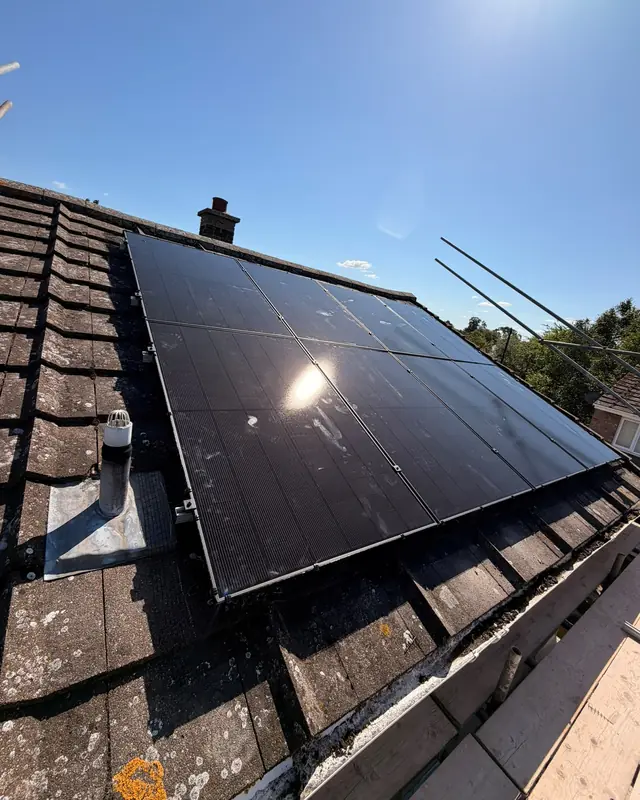
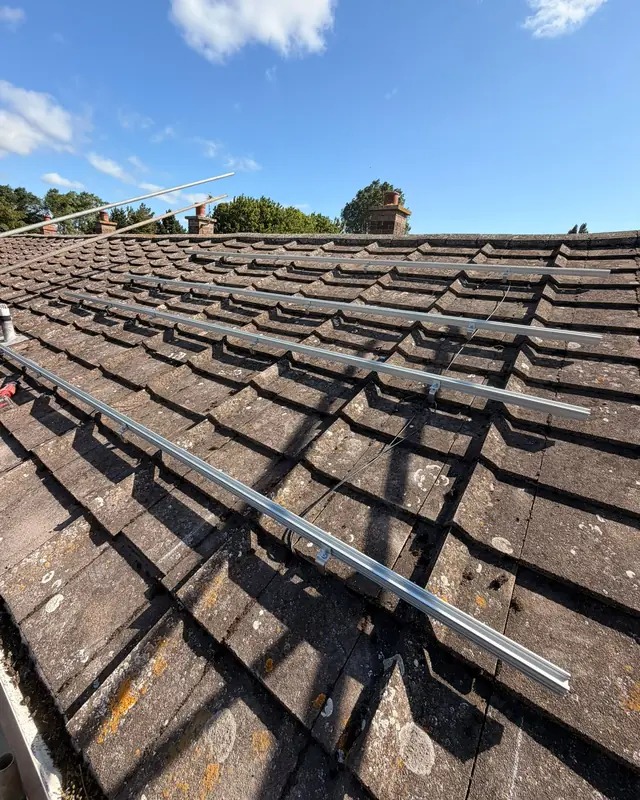
A recent solar panel and battery installation in LN4
A home in the LN4 postcode district, which runs south-east from Lincoln through villages such as Branston, Heighington and Washingborough. Photos from the job, July 2026.
About 18 miles east of Retford
Before
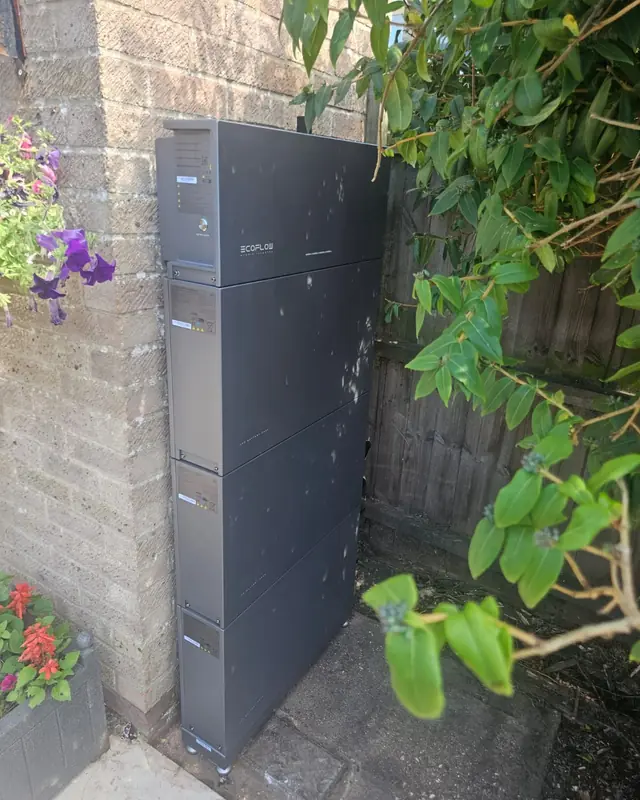
The battery
Uphill and downhill
Lincoln climbs from about 20 m by the River Witham to 75 m at Castle Hill, where the cathedral and castle stand. Steep Hill links the two halves. On the slopes, a neighbour's roof or a row of trees can shade yours for part of the day, which is why we look closely at shade when we design your system.
Downhill
About 20 m
by the River Witham
Steep Hill links the two halves
Uphill
75 m
at Castle Hill, where the cathedral and castle stand
City homes and village homes
The city and the countryside around it are very different. In the City of Lincoln, nearly 30% of households live in terraced houses and about 20% in flats, according to the 2021 Census. In West Lindsey, the district north of the city, half live in detached houses.
-
Nearly 30%of households in the City of Lincoln live in a terraced house
Terraces: smaller roofs, but often a useful rear slope. Around four panels on a mid-terrace is a common starting point, and even a small solar system cuts what you buy. A south-facing slope makes more electricity than an east or west one, by around 15 to 20%.
-
About 20%of households in the City of Lincoln live in a flat
Flats: solar on a block needs the freeholder's agreement, and the planning limits for blocks of flats are stricter than for houses.
-
Halfof households in West Lindsey, north of the city, live in a detached house
Detached village homes: usually plenty of roof, and sometimes a garage or outbuilding as well.
Choosing solar panel installers in Lincoln: a checklist
Before you choose a solar panel installer, ask these questions. A good company will answer them without being pushed.
- Are you MCS certified? MCS is the UK quality mark for small-scale renewable energy systems. Your solar PV system and the company that fits it both need MCS certification before you can claim Smart Export Guarantee payments.
- Will someone check my roof in person? Yes, before anything is fitted. Your consultation can be by phone or at your home, and once you've signed, an independent technical surveyor checks the roof, its condition and where the panels and cables will go.
- Have you checked planning for my address? It matters most in the 11 conservation areas and around the cathedral.
- Which consumer code do you belong to? We're members of RECC, and of NAPIT for the electrical work. RECC advises not paying a deposit of more than 25% of the price when you sign. We take no deposit at all.
- What warranties come with the kit? Our panels come with a 25-year product warranty and a 30-year performance warranty, which guarantees they keep producing a minimum level of power. Your written quote lists the warranties on everything we fit.
- What do independent reviews say? They're a fair test of customer satisfaction. We're rated 4.8 out of 5 from 36 reviews on Trustpilot and 5.0 from 6 on Google, as of 10 October 2026.
- Who deals with the network? Your installer should notify the network operator after a standard solar panel installation, or get its approval first for a larger one. We do both.
Planning in Lincoln
The City of Lincoln Council handles planning for the city. It has 11 conservation areas, including Cathedral and City Centre, Lindum and Arboretum, West Parade and Brayford, St Peter-at-Gowts, Carline, Newport and Nettleham Road, Sibthorp, St Catherines, The Dell, Swanpool and Gowt's Bridge.
In those, panels can't go on a wall, balcony or roof enclosure facing the road, and flat-roof panels need prior approval. Around the cathedral and castle there are many listed buildings, and listed buildings always need consent. For most houses elsewhere, roof panels don't need planning permission.
The city's 11 conservation areas
- Cathedral and City Centre
- Lindum and Arboretum
- West Parade and Brayford
- St Peter-at-Gowts
- Carline
- Newport and Nettleham Road
- Sibthorp
- St Catherines
- The Dell
- Swanpool
- Gowt's Bridge
From 1 April 2028 the city is due to become part of a new "Lincoln Council", taking in some surrounding wards, subject to Parliament. Until then the City of Lincoln Council handles planning.
Solar battery storage in Lincoln
Solar batteries store the excess energy your panels make during the day so you can use it in the evening and buy less from the grid. Which? says most home battery storage systems hold 5 kWh to 15 kWh and often come with a 10-year warranty, so expect to replace one at least once over the life of the panels.
Be realistic about the numbers. The Energy Saving Trust says a battery's savings won't always be enough on their own to justify its cost. It tends to suit households who are out during the day, or who want to charge it overnight on a cheaper tariff. Are solar batteries worth it?
- what most home battery storage systems hold
- 5 to 15 kWh
Where battery storage can go
Space matters in Lincoln's terraces and flats. The fire-safety standard for home batteries, PAS 63100, says they should go outdoors where practicable, and never in bedrooms, lofts, or on stairs, landings and other escape routes. The Energy Saving Trust lists garages, outside walls and utility rooms as common spots, and we agree a safe one with you before anything is fitted. We install solar battery storage alongside new panels, and we can add a battery to an existing solar system, including one another company fitted.
Outdoors where practicable. Common spots:
- Garages
- Outside walls
- Utility rooms
Never
- Bedrooms
- Lofts
- Stairs, landings and other escape routes
Solar energy, bills and your home's value
Solar panels generate electricity from daylight, so they still work on cloudy days, just at a lower level, and they make less in winter when the days are shorter. Every unit you use straight from the roof is one less unit on your electricity bills. With rising energy costs, that adds up: the Ofgem price cap went up 4% for a typical household from 1 October 2026, and electricity now averages 26.32p a unit, with VAT removed from electricity bills until 31 March 2027.
Solar power also shrinks your carbon footprint: around one tonne of carbon a year for a typical home system, by the Energy Saving Trust's estimate. Your long-term savings depend on your roof and how much of the power you use at home, and we work them out for your house before you commit.
Getting paid for what you export
Whatever solar power you don't use goes to the grid, and under the Smart Export Guarantee a supplier pays you money for it, on top of the savings on your electricity bills. Every tariff must pay more than zero, but each supplier sets its own rate, so Lincoln homeowners should shop around. Your solar PV system and its installer both need to be MCS certified to qualify.
Solar panels are a long-term investment. The Energy Saving Trust says they should last 25 years or more, and the one bit of maintenance to plan for is a new inverter, which it expects after around 12 years.
Do solar panels add value to a Lincoln home?
Which? found that most estate agents don't think solar panels typically raise property value, though they can make a home easier to sell. Solar Energy UK's analysis puts the average uplift at 0.9% to 2%. Keep your MCS certificate and electrical certificates safe for when you sell. Do solar panels add value to your home?
- a unit, what electricity now averages
- 26.32p
- the rise in the Ofgem price cap for a typical household from 1 October 2026
- 4%
- of carbon a year, around, saved by a typical home system
- 1 tonne
- or more, how long panels should last
- 25 years
- the average uplift in value, by Solar Energy UK's analysis
- 0.9% to 2%
Grants, schemes and the network
Lincoln gets Warm Homes: Local Grant funding for eligible lower-income households through the Midlands Net Zero Hub. The City of Lincoln Council runs it with YES Energy Solutions, and its page lists solar PV among the measures, but when we checked in October 2026 there was a waiting list. Lincolnshire County Council also ran a group-buying solar and battery scheme in 2026; registration closed on 24 July 2026.
The electricity network around Lincoln is, as far as we can tell, run by National Grid Electricity Distribution as part of its East Midlands area, but the boundary with Northern Powergrid runs through the county, so we confirm yours from your postcode. Our solar and battery systems start from £7,500 fully installed (10 panels, a Fox ESS battery and scaffolding to one side), or from £4,995 for solar panels on their own, and home solar and batteries are 0% VAT until 31 March 2027.
How our solar installations run
The whole process starts with a free consultation, by phone or at your home, and a written quote, sized to your energy needs, with no pressure to sign. If you go ahead, an independent technical surveyor checks the details, and our office handles the paperwork and books a date to install your solar panel system. Systems over 3.68 kW need the network operator's consent first, which can take from a couple of days to 90. Once the scaffolding is up, most homes are fitted and switched on in a day, and for systems that don't need that consent, the whole process usually takes two to three weeks from first call to switch-on. Afterwards we notify the network, email your handover pack within 7 working days, and stay on hand for questions.
Our services cover residential and commercial properties, including farm buildings around the city, and we install solar PV and batteries on both. What happens on installation day
- from first call to switch-on, for systems that don't need network approval
- 2 to 3 weeks
- to fit most homes, once the scaffolding is up
- 1 day
- to your handover pack
- 7 working days
What our customers say
Rated 5 out of 5 on Trustpilot
Spoke to about 5 companies all singing from the same hymn sheet. Landed with solar save. Seemed like the only ones that genuinely knew what they were talking about.
Rated 5 out of 5 on Google
We felt looked after, not patronised, and the team were very professional and thorough.
Rated 5 out of 5 on Trustpilot
All fitted and up and running the same day! No fuss or mess and very efficient.
Questions people ask
How far are you from Lincoln?
About 18 miles. We're a family-run business based in Retford, just west of the Trent.
Are you certified to install solar panels?
Yes. We're MCS certified and members of RECC and NAPIT, so the systems we fit qualify for Smart Export Guarantee payments.
Can I have solar panels in uphill Lincoln?
Often, yes, but more of uphill Lincoln is listed or in a conservation area, so where the panels go matters. Listed buildings always need consent. We check your address first.
Can I have solar panels on a flat in Lincoln?
Possibly, with the freeholder's agreement. The planning limits for blocks of flats are stricter than for houses, so talk to us and your freeholder first.
Is there a solar grant in Lincoln?
For eligible lower-income households, the Warm Homes: Local Grant runs in Lincoln through the Midlands Net Zero Hub. The City of Lincoln Council delivers it with YES Energy Solutions and lists solar PV among the measures, though there was a waiting list when we checked in October 2026.
Do solar panels work with air source heat pumps?
Yes. A heat pump or an electric vehicle raises your electricity use, so tell us at your consultation if you have one or plan one. The Energy Minister, quoted by MCS, said a household could save up to £550 a year with a heat pump, solar PV and a battery together.
Can I add solar batteries later?
Yes. You can start with panels and add a battery when it suits you. We fit batteries to existing systems, including ones from other installers.
Sources
Figures and rules on this page were checked on 11 October 2026. Schemes, tariffs and prices change, so check the latest before you decide.
- ONS: Census 2021, accommodation type (TS044), 2021 census
- MCS: About us, updated 3 August 2026
- Ofgem: Smart Export Guarantee, checked 11 October 2026
- RECC: Advice for consumers, checked 11 October 2026
- legislation.gov.uk: General Permitted Development Order 2015, Schedule 2, Part 14, up to date to 9 October 2026
- legislation.gov.uk: S.I. 2026/896, solar permitted development changes, in force 27 August 2026
- Capsticks: Local government reorganisation decisions, July 2026, July 2026
- Which?: Solar panel battery storage, 15 May 2026
- Energy Saving Trust: Battery storage, updated 6 October 2026
- BSI: PAS 63100:2024, fire protection of home battery systems, March 2024
- Energy Saving Trust: Solar panels, costs, savings and benefits, updated 1 October 2026
- Energy Saving Trust: Solar power fact check, updated 13 August 2026
- Ofgem: Energy price cap, 1 October to 31 December 2026, 26 August 2026
- Ofgem: Energy price cap will rise by 4% from October 2026, 26 August 2026
- Ofgem: SEG guidance for generators, December 2019, still current
- Which?: Do solar panels add value to your home?, 13 April 2026
- GOV.UK: Warm Homes: Local Grant, successful local authorities, updated 2 July 2026
- City of Lincoln Council: Warm Homes Local Grant, checked 11 October 2026
- Lincolnshire County Council: Last chance, solar registration scheme closes tomorrow, 23 July 2026
- Energy Networks Association: Find my network operator, checked 11 October 2026
- HMRC: VAT on energy-saving materials and heating equipment (Notice 708/6), zero rate runs to 31 March 2027
- MCS: Record number of UK households combining renewables to improve energy resilience, 20 August 2026
Get your free quote in Lincoln
Tell us a little about your home and we'll call to arrange a free consultation, by phone or at your home, then send you a written quote. No obligation, and no pressure.
Prefer to talk? Call 0333 577 6576, Monday to Friday, 9am to 5pm.
- Step 1
- Step 2
Get My Free Solar Quote
Get a quote and we'll help calculate how much you could save.
Google
reviews5.0
Rated 5 out of 5
by our customers on Google
We'll only use your details for your quote. Privacy policy