

In short
- Panels, inverters and batteries supplied and fitted in a house or flat are zero-rated until 31 March 2027.
- Your installer puts 0% on the invoice. You don't claim anything back.
- From 1 April 2027 the rate is 5%, or £50 more on every £1,000. The Budget on 28 October 2026 kept that date.
- Shops, offices and factories pay the standard 20%, and so does kit bought without fitting.
| Situation | Until 31 March 2027 | From 1 April 2027 |
|---|---|---|
| Panels supplied and fitted in a house or flat | 0% | 5% |
| Batteries: with panels, added later or on their own | 0% | 5% |
| Kit bought without fitting, including plug-in kits | 20% | 20% |
| You buy the kit, an installer fits it | Fitting 0%, kit 20% | Fitting 5%, kit 20% |
| Village hall and some other charity buildings | 0% | 5% |
| Shop, office, factory, hotel or farm building | 20% | 20% |
| Houses and flats in Northern Ireland | 0% (since 1 May 2023) | 5% |
What the zero rate covers
It covers the whole job of supplying and fitting a PV system in a house or flat. HMRC's VAT Notice 708/6 says panels include the cabling, the control panel and the inverter. Systems in a building, on it or on its site all count, so panels in the garden of a house can qualify too.
Work that's only there to make the installation possible is part of the same job, at one rate. The guidance gives the example of cutting a loft hatch to lay loft insulation.
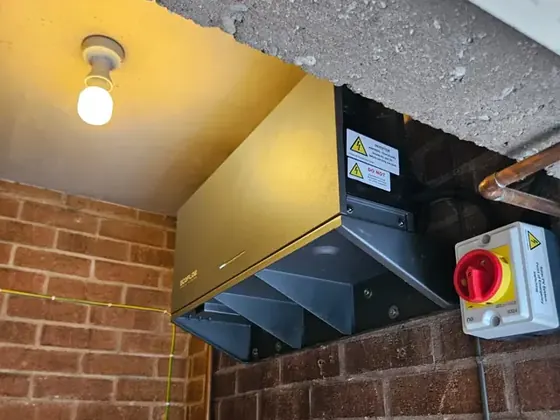
Our solar and battery systems are fully installed from £7,500 (10 panels, a Fox ESS battery and scaffolding to one side), and panels on their own from £4,995. Prices include VAT, at 0% until 31 March 2027. Both are on our cost page.
Not all solar panel installations get everything at 0%, though. Items not on the list below, such as an electric car charger or a roof repair, don't get the zero rate: expect 20% on them. Ask for them as separate lines on your quote.
Energy-saving materials: the full list
Homes currently benefit from the zero rate on these installations:
- controls for central heating and hot water
- draught stripping and insulation
- solar panels, and wind and water turbines
- air, ground and water source heat pumps
- groundworks needed to fit ground and water source heat pumps
- micro combined heat and power units and wood-fuelled boilers
- batteries that store the energy you make or buy
- smart diverters, which send spare energy from your panels to appliances in the building, such as the heater in a hot water tank
You don't need to claim anything
The installer applies the zero rate to qualifying solar panels when they bill you, so there's nothing to claim back.
If a quote for fitting panels to a house adds 20%, ask why. Possible reasons are kit sold without fitting, extras like a car charger, or a building that isn't a dwelling.
Batteries: with new panels, added later or on their own
Batteries are zero-rated too, until 31 March 2027, in three cases:
- Fitted with new panels, as part of the same job.
- Added to panels you already have, known as retrofitting. Covered since 1 February 2024.
- Standalone, storing energy from the grid, or from both your panels and the grid. Also covered since 1 February 2024.
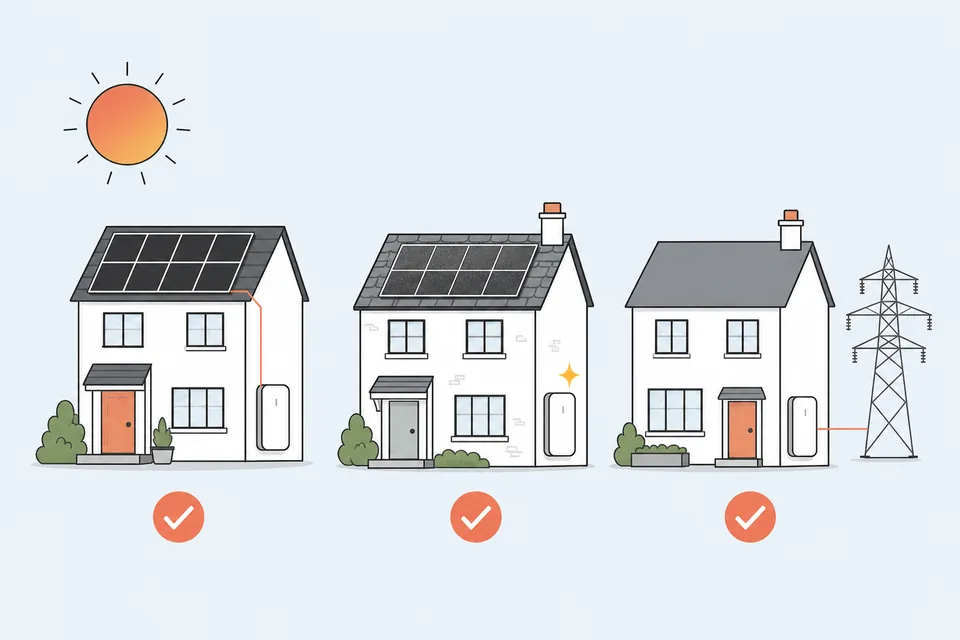
So you can add batteries to an older system and still pay 0%. We fit batteries to panels other installers put in: see adding batteries to existing panels, and what battery storage costs.
Heat batteries, which store energy as heat, are due to join the list from 1 April 2027 at 5%, once the regulations the Budget 2026 announced are made.
What changes on 1 April 2027
The VAT rate goes back to 5%, not 20%, from 1 April 2027. That end date was set when the zero rate began in 2022. The Budget on 28 October 2026 kept it: the Budget document says the relief "will revert to 5 per cent from 1 April 2027".
The social policy conditions and 60% test that applied from October 2019 won't come back: the 2022 and 2023 changes removed them for good.
How much more a system costs at 5%
Prices include VAT, at 0% until 31 March 2027. 5% adds £50 to every £1,000 of the price before VAT. If our from-prices stayed the same before tax:
- Panels and batteries, from £7,500: £375 more, £7,875 in all.
- Panels only, from £4,995: £249.75 more, £5,244.75 in all.
That's arithmetic, not a quote for after April 2027. To see whether a grant could lower the cost, see our grants guide.
Not the same as 0% on your power bill
Don't mix this up with the separate cut on household electricity bills. The Budget plans to extend that zero rate until 30 June 2027. That covers the energy you buy, not the equipment.
Signed before 31 March 2027 but fitted after?
The date you sign doesn't fix the rate. What counts for VAT is when you pay or are invoiced, and when the work is done. This is called the tax point. So the safest plan is to have the job finished by 31 March 2027.
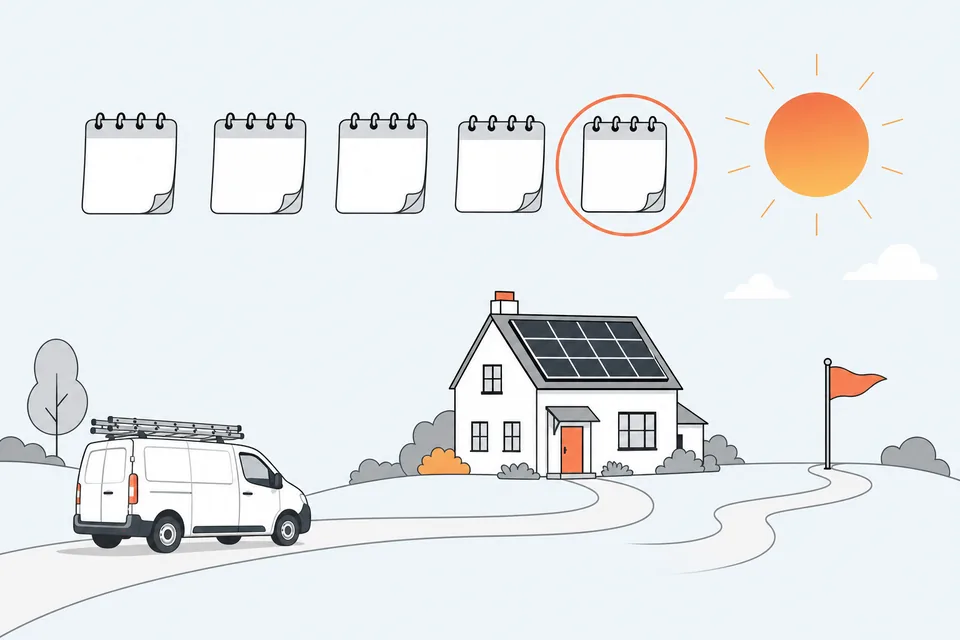
Money paid before the change
Money you pay, or are invoiced for, before 1 April 2027 is normally taxed at the rate on that date: 0%. That's in HMRC's VAT guide, Notice 700, section 30.
Work finished before, invoiced after
If the job is finished by 31 March 2027 but the invoice comes later, the installer can still charge 0%. The rules let a supplier use the old rate for work done before a rise. It's the installer's choice, though, and a customer can't insist on it.
If the work runs past 31 March 2027 and nothing has been paid or invoiced, expect 5%. Some installers may split the bill and charge 0% on work done before the change, but that's their choice too.
What to check on your quote
- The rate is shown. A quote for a house or flat should show VAT at 0% until 31 March 2027, included in the total.
- One firm supplies and fits. Kit you buy separately carries 20%.
- Extras are separate lines. A car charger or roof repair isn't on the list.
- The fitting date. Most of our installations take a day. Systems over 3.68 kW need the network operator's consent first, which can take from a couple of days to 90. See G98 vs G99.
- What happens if it slips. Ask, in writing, whether they'll use the old rate for work finished by 31 March 2027.
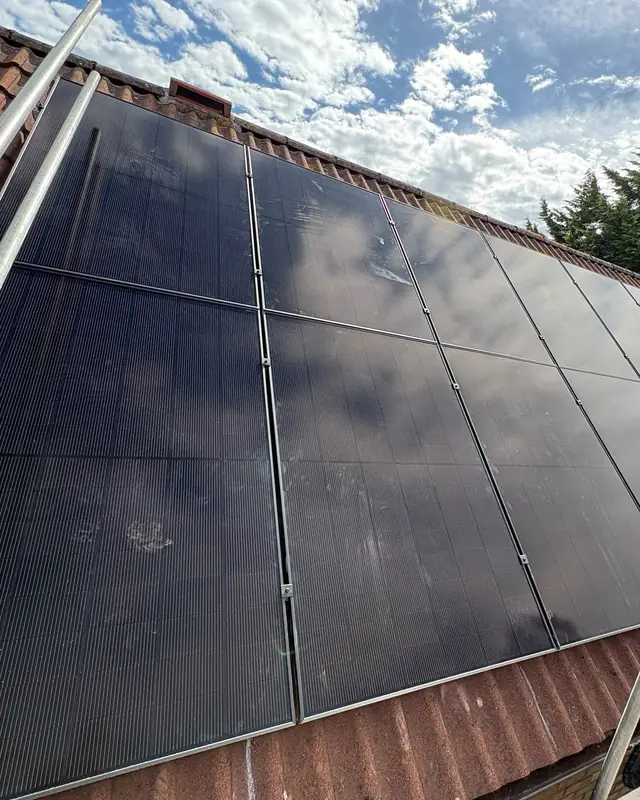
Thinking about panels before April 2027?
Free consultation by phone or at your house, then a written quote with the full price, VAT included. No pressure to sign.
Or call 0333 577 6576, Monday to Friday, 9am to 5pm. We'll only use your details for your quote. Privacy policy
Who gets the zero rate, and who pays 20%
It depends on how the building is used, not on who owns it. Residential buildings and some charity buildings get it. Workplaces such as shops and offices don't.
Homes, holiday lets and charity buildings
The relief covers houses, flats and other dwellings, care homes, hospices, student accommodation and self-catering holiday lets.
Caravans count if someone lives in them permanently. Houseboats count if they're built or adapted to live in and can't propel themselves. A boat that's someone's main home counts too, if the owner pays Council Tax or domestic rates on it. A rented house is still a dwelling, so landlords get 0% as well.
Since 1 February 2024, buildings a charity uses only for its non-business activities, or as a village hall or similar community space, qualify too. Hotels, inns, hospitals and prisons don't: they pay the standard rate.
Flats above shops and other mixed buildings
The zero rate can apply to the part of a building that's a dwelling. Where a building is part shop or office, check with HMRC or your accountant before you sign.
Commercial premises and farm buildings
Offices, shops, factories, warehouses and farm buildings used for farming pay the standard rate of 20%. If you're VAT registered, you can usually reclaim it on items you buy for your trade. If something is also for personal use, you can only claim the trade share.
A farmhouse is a dwelling, so panels on it get 0%. For tax relief on the cost of a system, see our guide to capital allowances.
Buying panels yourself, and plug-in kits
If you buy panels or batteries without fitting, you pay the standard 20%: the guidance says kit supplied without installing it is standard-rated.
If you buy the kit yourself and pay an installer just to fit it, the fitting can still be zero-rated. The kit you bought keeps its 20%. So one firm to supply and fit everything usually means less VAT overall.
Plug-in kits work the same way. Bought on their own, without installation, they carry 20%. See plug-in panels: the rules.
The relief doesn't depend on MCS certification: Notice 708/6 doesn't mention it. MCS matters elsewhere: to be paid for the energy you send to the grid, you'll usually need an MCS certificate.
Is it the same across the UK?
Yes. England, Scotland and Wales have had the zero rate since 1 April 2022. Northern Ireland joined on 1 May 2023, under the Windsor Framework. All four end on 31 March 2027 and move to 5%.
How the rate has changed over time:
- 1 April 2000: panels get a reduced 5% rate.
- 1 October 2019: 5% with conditions: social policy conditions or a 60% test.
- 1 April 2022: 0% in Great Britain, with the conditions removed.
- 1 May 2023: 0% in Northern Ireland.
- 1 February 2024: batteries, smart diverters and charity buildings added.
- 28 October 2026: the Budget keeps 5% from April 2027 and plans to add heat batteries.
- 1 April 2027: 5%.
Is home solar zero-VAT in Germany too?
Yes, in a similar way. German law sets 0% on panels, the parts needed to run them and storage, supplied to the operator of a system on or near a private dwelling. Systems up to 30 kW peak are treated as meeting that test.
Questions people ask
Do I have to claim the zero rate back?
No. Your installer charges 0% on the invoice for an installation in a house or flat. There's nothing to claim.
Is a battery on its own zero-rated?
Yes, until 31 March 2027. Since 1 February 2024 that includes standalone batteries charged from the grid and batteries added to panels you already have.
Will the rate go back up?
Yes, to 5% from 1 April 2027, not 20%. The Budget on 28 October 2026 kept that date.
Is it 0% in Northern Ireland?
Yes, since 1 May 2023 and until 31 March 2027, then 5%, the same as the rest of the UK.
Is there VAT on export payments?
Not for most households. VAT is only added to sales by those registered for it. HMRC's manual treats Feed-in Tariff payments for energy sent to the grid as payment for that energy, so if you're registered, ask your accountant. This answer doesn't cover income tax.
About this guide
Written by the SolarSave team in Retford: MCS certified installers, led by a founder in solar since 2010. We checked every rule and date against GOV.UK and Ofgem guidance, the HMRC manuals, legislation.gov.uk and German law on 16 November 2026, after the Budget of 28 October 2026. We'll update this page when the rate changes on 1 April 2027, or sooner if the rules change.
The 16 sources we checked
- HMRC: VAT on energy-saving materials and heating equipment (VAT Notice 708/6), last updated 31 January 2024, checked 16 November 2026
- HMRC manual VENSAV2083: VAT rates on energy-saving materials, with start dates, updated 16 May 2024, checked 16 November 2026
- GOV.UK: Budget 2026, overview of tax legislation and rates (measures 2.20 and 2.22), published 28 October 2026, updated 5 November 2026, checked 16 November 2026
- GOV.UK: The Value Added Tax (Installation of Energy-Saving Materials) Order 2022, 23 March 2022, checked 16 November 2026
- GOV.UK: The Value Added Tax (Installation of Energy-Saving Materials) Order 2023 (Northern Ireland), 29 March 2023, checked 16 November 2026
- GOV.UK: Extension of VAT energy-saving materials relief, 11 January 2024, checked 16 November 2026
- HMRC: VAT guide (VAT Notice 700), section 30, changes in tax rates and liability, last updated 25 June 2026, checked 16 November 2026
- HMRC manual VATTOS7220: change of rate, adopting the special rules, updated 8 April 2025, checked 16 November 2026
- legislation.gov.uk: Value Added Tax Act 1994, section 88 (supplies spanning a change of rate), checked 16 November 2026
- HMRC manual VENSAV3100: meaning of residential accommodation, updated 16 May 2024, checked 16 November 2026
- GOV.UK: VAT rates, checked 16 November 2026
- GOV.UK: Reclaim VAT on business expenses, updated 30 October 2024, checked 16 November 2026
- HMRC manual VATSC03162: Feed-in Tariffs, basic arrangements (export payments), updated 7 March 2025, checked 16 November 2026
- GOV.UK: How VAT works, updated 24 October 2024, checked 16 November 2026
- Ofgem: Smart Export Guarantee, guidance for generators (paragraphs 1.12 and 1.13), December 2019, checked 16 November 2026
- gesetze-im-internet.de: German VAT Act (UStG), section 12(3), checked 16 November 2026